Tracing the Development of Adaptive Difficulty Systems in Top-Ranked Mobile Games Based on Global Performance Data
Written by Leon Lorenz · May 22, 2026
Tracing the Development of Adaptive Difficulty Systems in Top-Ranked Mobile Games Based on Global Performance Data
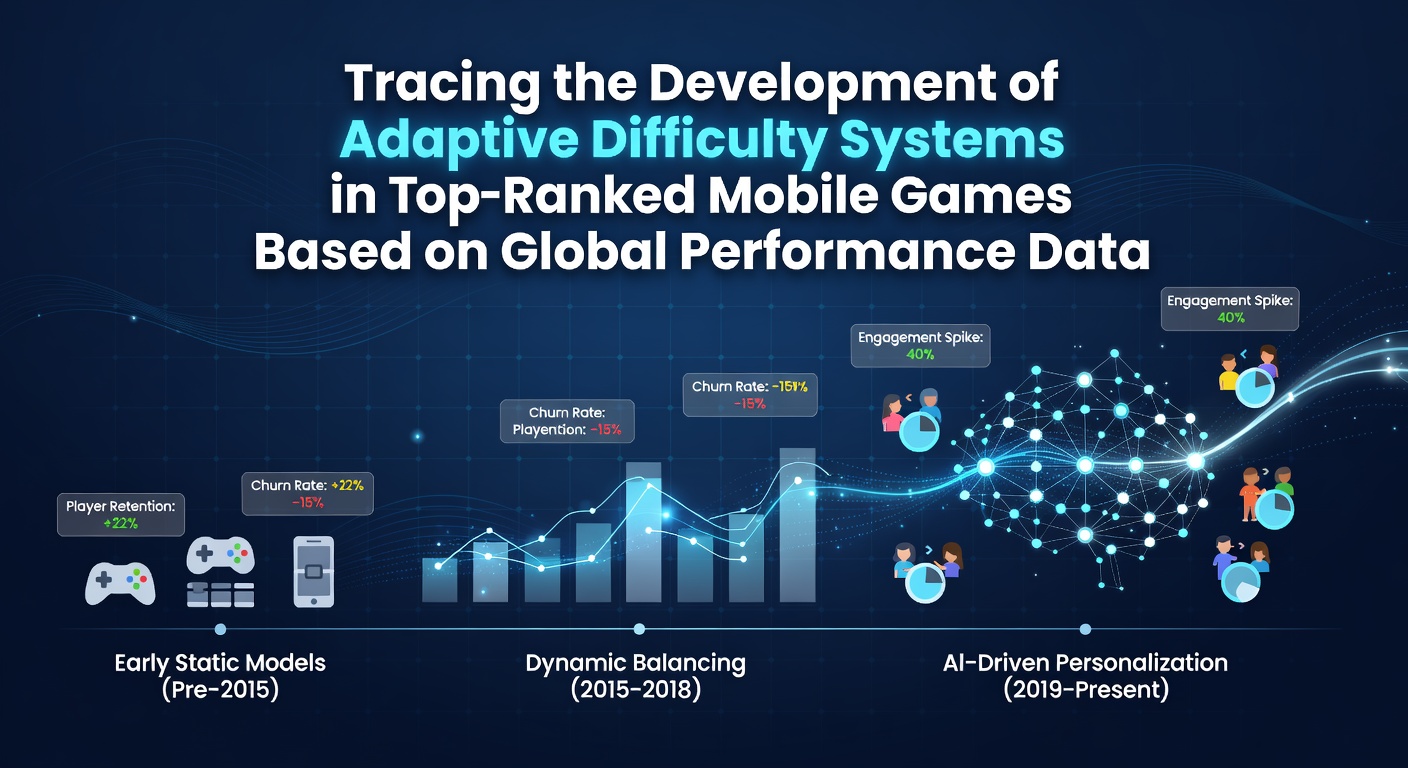
Adaptive difficulty systems in mobile games adjust challenge levels according to individual player performance metrics, and their evolution draws directly from aggregated global data on win rates, session lengths, and retention figures. Developers began incorporating these mechanisms more systematically after 2015 when mobile analytics platforms started supplying detailed performance datasets across regions.
Early Foundations in Data Collection
Initial implementations relied on simple rubber-banding techniques that raised or lowered enemy health pools based on a single variable such as deaths per level. Global performance data from markets in North America, East Asia, and Europe revealed that players in different time zones exhibited distinct drop-off patterns, prompting studios to expand their models beyond basic thresholds. By 2018 several top-ranked titles had integrated telemetry that tracked not only completion percentages but also time spent on failed attempts.
Expansion Through Global Metrics
Research indicates that between 2019 and 2022 the volume of available performance data increased sharply as mobile devices captured finer-grained inputs including swipe accuracy, reaction times, and resource management choices. One study released by the Entertainment Software Association highlighted how studios began weighting regional differences, noting that Asian players often showed higher persistence on repeated failures compared with Western cohorts. This led to algorithms that applied dynamic scaling calibrated against worldwide averages rather than isolated test groups.
Turns out these refinements coincided with the rise of live-service models, where continuous data streams allowed real-time adjustments instead of static patches. Developers observed that titles maintaining engagement above 45 percent after seven days consistently used multi-factor difficulty curves informed by cross-border statistics.
Advanced Algorithms and Machine Learning Integration
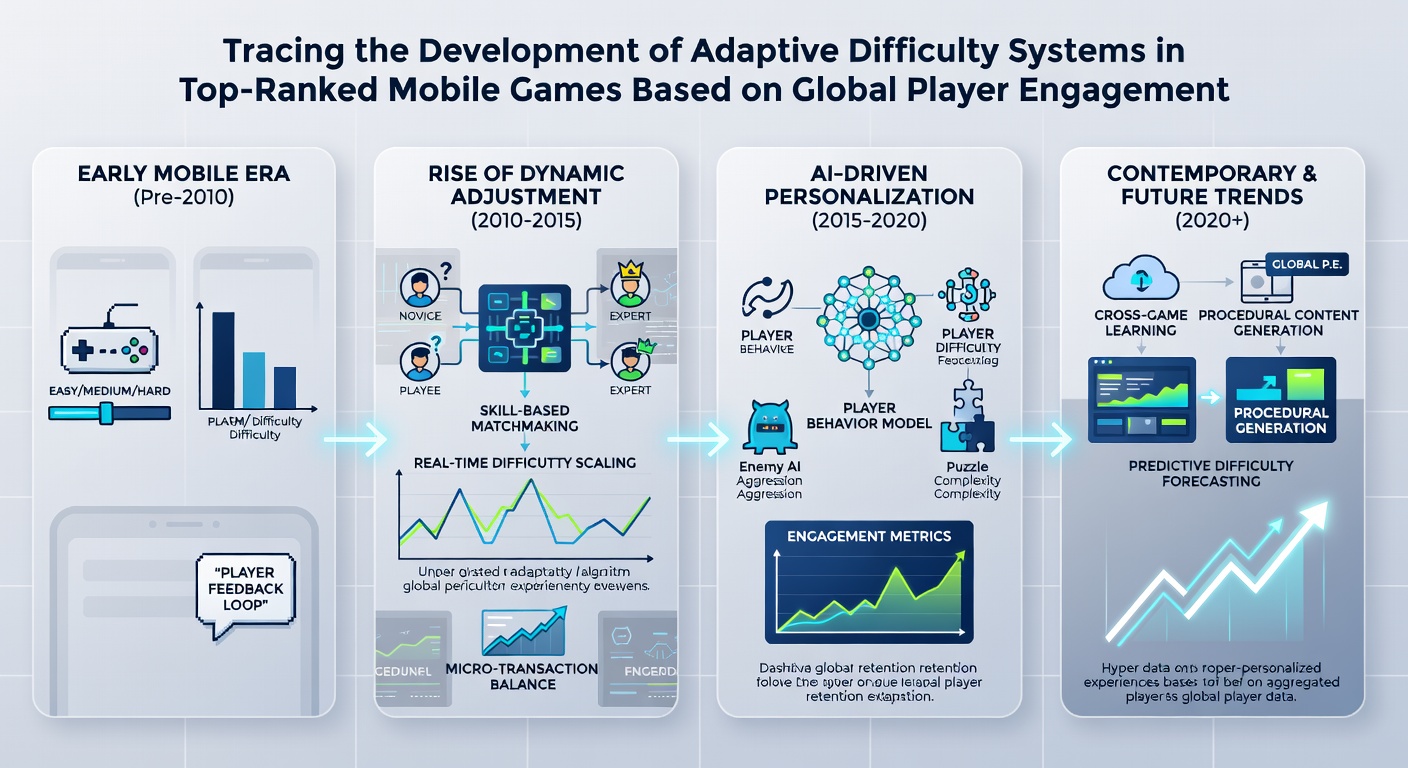
By 2023 machine learning frameworks entered wider use, processing millions of daily sessions to predict optimal challenge points. Data from sources such as Newzoo showed that games employing these systems recorded measurable lifts in daily active user retention, particularly when adjustments responded to both short-term performance spikes and longer-term skill plateaus. In May 2026 fresh aggregates from multiple app stores confirmed that titles updating their models quarterly outperformed those relying on annual reviews by an average of 12 percent in seven-day retention metrics.
Observers note that the most successful implementations blend local device processing with periodic server-side recalibration drawn from anonymized global pools. This hybrid approach reduces latency while still accounting for emerging patterns, such as seasonal shifts in playtime across hemispheres.
Case Examples from Leading Titles
Top-ranked entries in the action and puzzle categories illustrate distinct applications. One battle-royale mobile game adjusted loot distribution and opponent density according to average squad survival rates collected across 180 countries. Another match-three title modified cascade frequencies and booster availability after analyzing failure clusters from high-density urban players versus rural cohorts. These changes emerged directly from performance datasets rather than designer intuition alone.
Figures reveal that when difficulty systems incorporated at least five performance variables the variance in player progression speed narrowed significantly, producing more consistent session durations across skill brackets.
Current Landscape in 2026
As of May 2026 the emphasis has shifted toward predictive rather than reactive tuning. Systems now forecast when a player is likely to disengage based on historical global cohorts with similar early metrics, then introduce subtle scaffolding before frustration peaks. Industry reports continue to track how these interventions affect monetization indirectly through sustained engagement rather than direct difficulty gating.
Conclusion
The trajectory of adaptive difficulty in mobile games demonstrates a clear progression from rudimentary adjustments to sophisticated, data-informed frameworks reliant on worldwide performance statistics. Continued refinement depends on access to high-quality, region-stratified datasets and ongoing collaboration between analytics teams and design departments. As collection methods grow more precise, the capacity for personalized yet balanced experiences expands accordingly.