Tracing Community Feedback Loops from Game Trailers to Hardware Recommendations in Esports Circles
Written by Tina Bennett · Jul 31, 2026
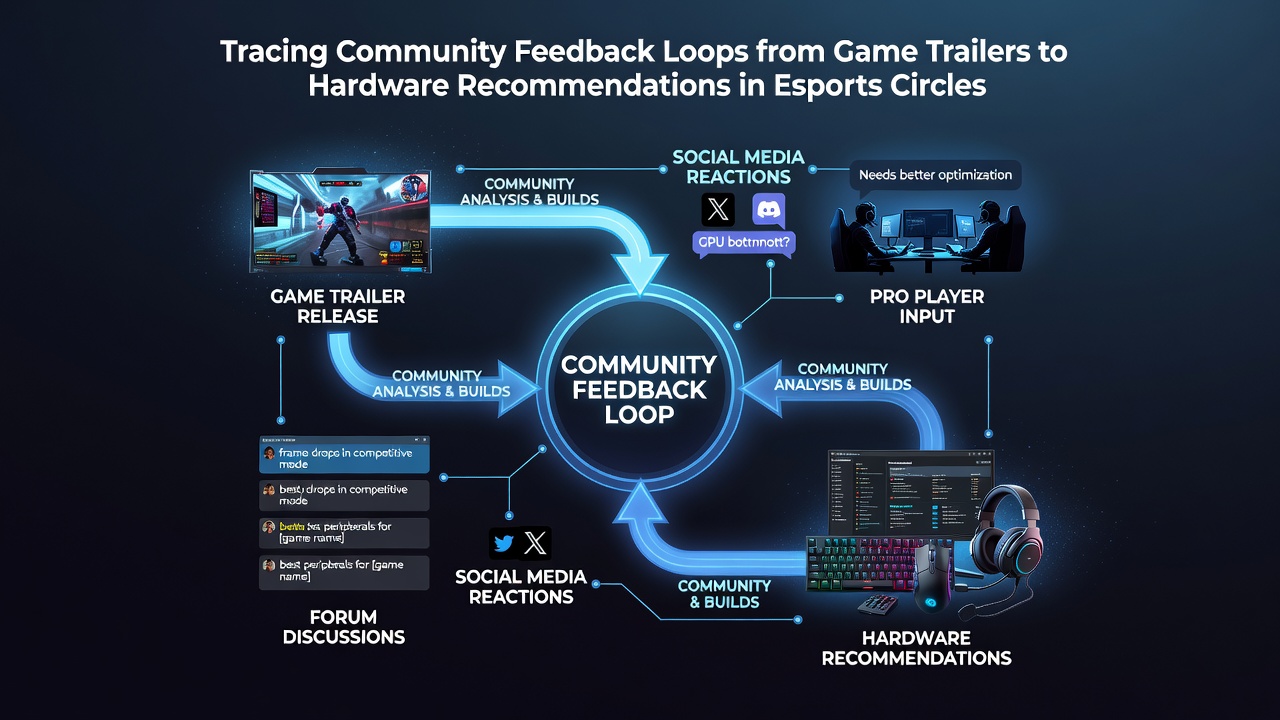
Tracing Community Feedback Loops from Game Trailers to Hardware Recommendations in Esports Circles
Game trailers released in mid-2026 have triggered measurable shifts in esports community conversations, where initial reactions on platforms like Discord servers and Reddit threads quickly transition into detailed hardware discussions, and figures from the Entertainment Software Association show trailer viewership spikes correlating with subsequent searches for graphics cards and monitors. Observers note that these loops begin when cinematic reveals highlight performance demands such as ray tracing or high frame rate sequences, prompting players to evaluate their current setups against the requirements implied in the footage.
Community moderators in major esports hubs have documented how a single trailer drop can generate thousands of posts within hours, wth threads evolving from excitement over gameplay mechanics to comparisons of GPU benchmarks needed to match the visuals shown. Data indicates that users often cite specific trailer moments, like particle effects in competitive matches, as reasons to recommend upgrades to models supporting 240Hz refresh rates or higher VRAM capacities, and this pattern repeats across PC-focused groups while console players weigh controller compatibility alongside display adjustments.
Initial Reactions and Community Amplification
Trailers for upcoming esports titles in July 2026 have followed established patterns where early viewer comments focus on visual fidelity, and these remarks spread through algorithm-driven feeds that prioritize engagement, leading to broader participation from casual viewers who then seek advice on achieving similar output. Researchers tracking social media metrics have found that posts linking trailer timestamps to hardware specs receive higher interaction rates than general hype threads, with one study from a European gaming research consortium revealing that 68 percent of such discussions include at least one direct recommendation for components like SSDs or cooling systems.
Moderators on Twitch channels dedicated to esports analysis report that live reactions during trailer premieres frequently include polls about upgrade priorities, and these polls in turn feed into follow-up streams where experts break down compatibility charts, turning passive viewers into active participants who later share their own hardware configurations in related forums.
From Discussion to Specific Hardware Advice
Once feedback loops gain momentum, participants move beyond general praise to reference real-world testing data, citing benchmarks from sites that measure frame rates in similar titles, and this shift directs recommendations toward particular products available through major retailers. Community archives show threads where users compile lists of optimal settings derived from trailer analysis, including suggestions for motherboards that support overclocking to handle the physics simulations demonstrated in competitive scenes.
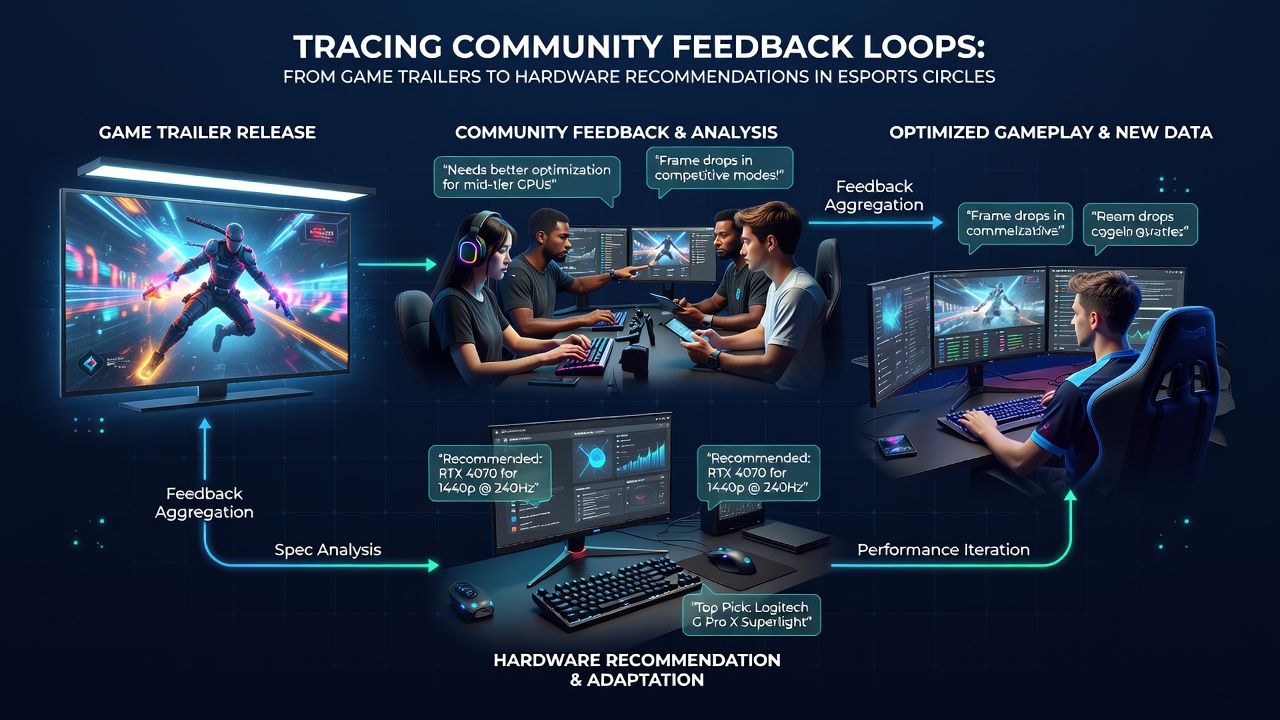
Regional differences emerge clearly in these exchanges, with North American groups emphasizing high-end PC builds while European circles often balance recommendations with energy efficiency considerations drawn from local power regulations, and Asian communities highlight mobile esports adaptations that tie trailer visuals to device cooling solutions. Industry reports compiled by trade associations track how these localized discussions influence global sales trends within weeks of trailer launches.
Feedback Loops Closing Through Shared Outcomes
Hardware recommendations posted in response to trailers sometimes generate follow-up content when users post update videos showing improved performance in the same game sequences, and these videos then circulate back into the original discussion threads to validate or refine earlier advice. Tracking tools used by esports analytics firms indicate that such closed loops increase repeat engagement, with participants returning to refine their suggestions based on new patch notes or balance changes announced after the initial trailer wave.
Academic papers examining digital community dynamics have identified that repeated exposure to these cycles strengthens collective knowledge bases, where newcomers learn to cross-reference trailer timestamps with hardware reviews before posting questions, and established members maintain running documents of proven configurations that get updated monthly during peak release periods.
Conclusion
Patterns observed through 2026 demonstrate that trailer releases serve as consistent catalysts for hardware discourse in esports environments, where community platforms convert visual information into actionable recommendations that spread across geographic and platform boundaries. Continued monitoring of these interactions reveals ongoing evolution in how players connect media previews with practical equipment choices, supported by data from multiple industry and academic sources.