Silk Road Simulations: Trade Route Algorithms Shape Economic Strategies in Historical Strategy Titles
Written by Leon Lorenz · Jul 12, 2026
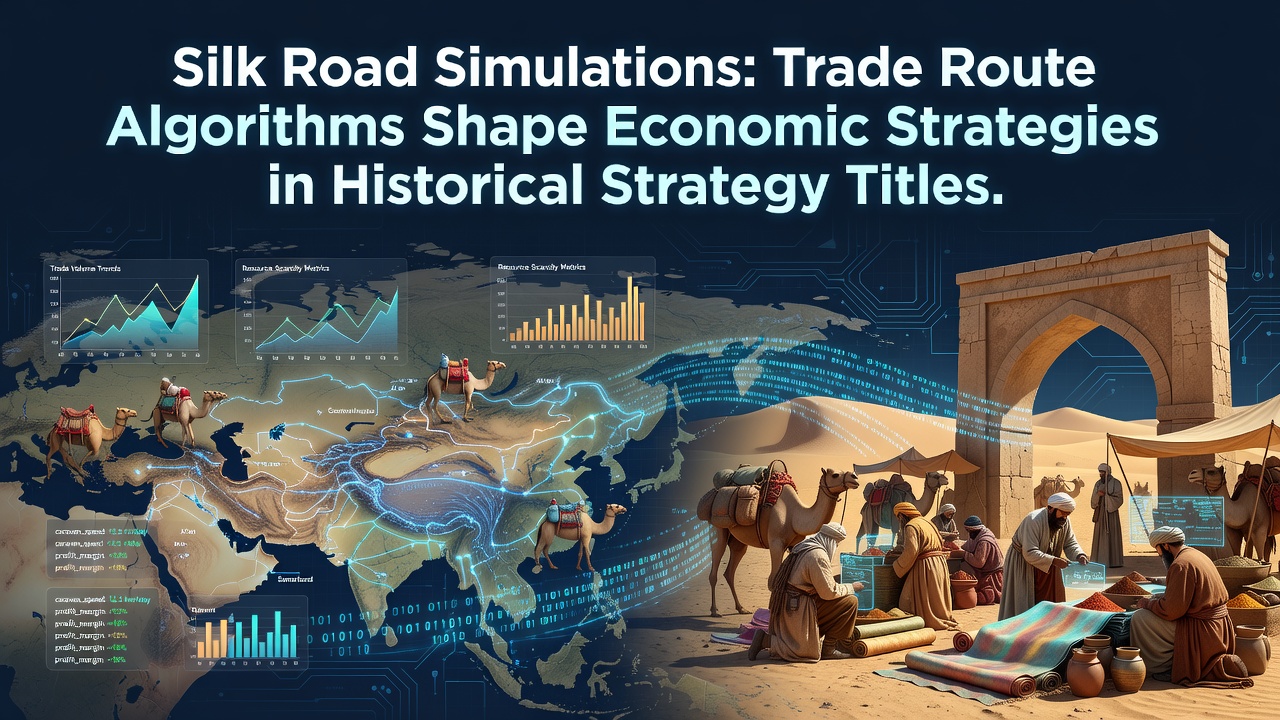
Silk Road Simulations: Trade Route Algorithms Shape Economic Strategies in Historical Strategy Titles
Trade route algorithms in historical strategy titles draw directly from the ancient Silk Road networks that connected Asia, the Middle East, and Europe over centuries of commerce. Developers implement these systems through pathfinding models that calculate optimal routes based on terrain costs, political stability, and resource availability, which in turn dictate how players allocate caravans, negotiate tariffs, and manage supply chains across expansive maps. ## Algorithmic Mechanics Behind Trade Routes
Core pathfinding engines rely on weighted graphs where nodes represent cities and edges incorporate variables such as distance, bandit risk, and seasonal weather patterns. Data from academic reconstructions of historical trade volumes informs these weights, allowing simulations to replicate documented shifts in spice and silk flows during the Tang and Yuan dynasties. Players encounter these mechanics when selecting caravan compositions, since algorithms adjust profitability based on load capacity versus protection expenses. Studies from the University of Toronto's Digital Heritage Lab reveal how reinforcement learning modules within recent titles adapt route suggestions according to player behavior over multiple campaigns. This adaptation creates dynamic markets where overused paths accumulate higher tolls while unexplored alternatives emerge with lower competition. ## Player Economic Strategies Shaped by Route Systems
Observers note that route algorithms force strategic layering of short-term gains against long-term infrastructure investments. A player might secure a mountain pass through diplomatic agreements, only to see the algorithm reroute traffic when rival factions introduce competing ports. Such interactions appear in titles that model the Mongol Empire's facilitation of Eurasian trade, where safe corridors boost volume but attract larger raiding parties. Case examples include campaigns in which participants optimized silk monopolies by chaining multiple algorithm-approved segments across Central Asian oases. Resource management then extends beyond simple buying and selling to include warehouse placement that anticipates algorithmic recalculations triggered by in-game events like dynastic changes or monsoon disruptions.  ## Developments Observed Through Mid-2026
By July 2026 several developers released patches that refined weather and conflict variables within trade algorithms, drawing from updated climate datasets compiled by Australian National University researchers. These updates altered profitability calculations for desert crossings, prompting players to diversify into maritime alternatives modeled after historical Indian Ocean routes. Industry reports from the Interactive Games and Entertainment Association in Australia document corresponding rises in cooperative multiplayer sessions focused on joint caravan protection. Additional refinements incorporated real-time data feeds from global economic simulations, allowing route algorithms to respond to simulated inflation rates that mirror historical price fluctuations recorded in Venetian ledgers. Players who tracked these shifts gained advantages in speculative trading of high-value goods like porcelain and tea. ## Integration With Broader Game Systems
Route algorithms rarely operate in isolation; they interface with diplomacy engines that adjust NPC attitudes based on trade volume through specific territories. When algorithms favor certain corridors, neighboring factions experience economic booms that influence alliance offers and tribute demands. Military strategy likewise adapts, since control of chokepoint cities becomes more valuable once the system identifies them as high-traffic nodes. Researchers at the European Institute for Game Studies have tracked how these interconnections affect campaign length, noting that optimized trade networks can accelerate technological progression trees tied to commerce income. This creates feedback loops where early route mastery funds later military expansions that secure even more lucrative paths. ## Conclusion
Silk Road simulations continue to evolve through iterative improvements to algorithmic accuracy and integration depth. Historical strategy titles increasingly treat trade routes as living systems that reward foresight and adaptability rather than static resource collection. As new data sources refine the underlying models, players encounter ever more nuanced economic landscapes that mirror documented patterns from centuries of Eurasian exchange.
## Developments Observed Through Mid-2026
By July 2026 several developers released patches that refined weather and conflict variables within trade algorithms, drawing from updated climate datasets compiled by Australian National University researchers. These updates altered profitability calculations for desert crossings, prompting players to diversify into maritime alternatives modeled after historical Indian Ocean routes. Industry reports from the Interactive Games and Entertainment Association in Australia document corresponding rises in cooperative multiplayer sessions focused on joint caravan protection. Additional refinements incorporated real-time data feeds from global economic simulations, allowing route algorithms to respond to simulated inflation rates that mirror historical price fluctuations recorded in Venetian ledgers. Players who tracked these shifts gained advantages in speculative trading of high-value goods like porcelain and tea. ## Integration With Broader Game Systems
Route algorithms rarely operate in isolation; they interface with diplomacy engines that adjust NPC attitudes based on trade volume through specific territories. When algorithms favor certain corridors, neighboring factions experience economic booms that influence alliance offers and tribute demands. Military strategy likewise adapts, since control of chokepoint cities becomes more valuable once the system identifies them as high-traffic nodes. Researchers at the European Institute for Game Studies have tracked how these interconnections affect campaign length, noting that optimized trade networks can accelerate technological progression trees tied to commerce income. This creates feedback loops where early route mastery funds later military expansions that secure even more lucrative paths. ## Conclusion
Silk Road simulations continue to evolve through iterative improvements to algorithmic accuracy and integration depth. Historical strategy titles increasingly treat trade routes as living systems that reward foresight and adaptability rather than static resource collection. As new data sources refine the underlying models, players encounter ever more nuanced economic landscapes that mirror documented patterns from centuries of Eurasian exchange.