Shadow Mapping Evolutions Reshape Stealth Mechanics Across Console Exclusives and Mobile Port Strategies
Written by Blake Lorenz · Jul 8, 2026
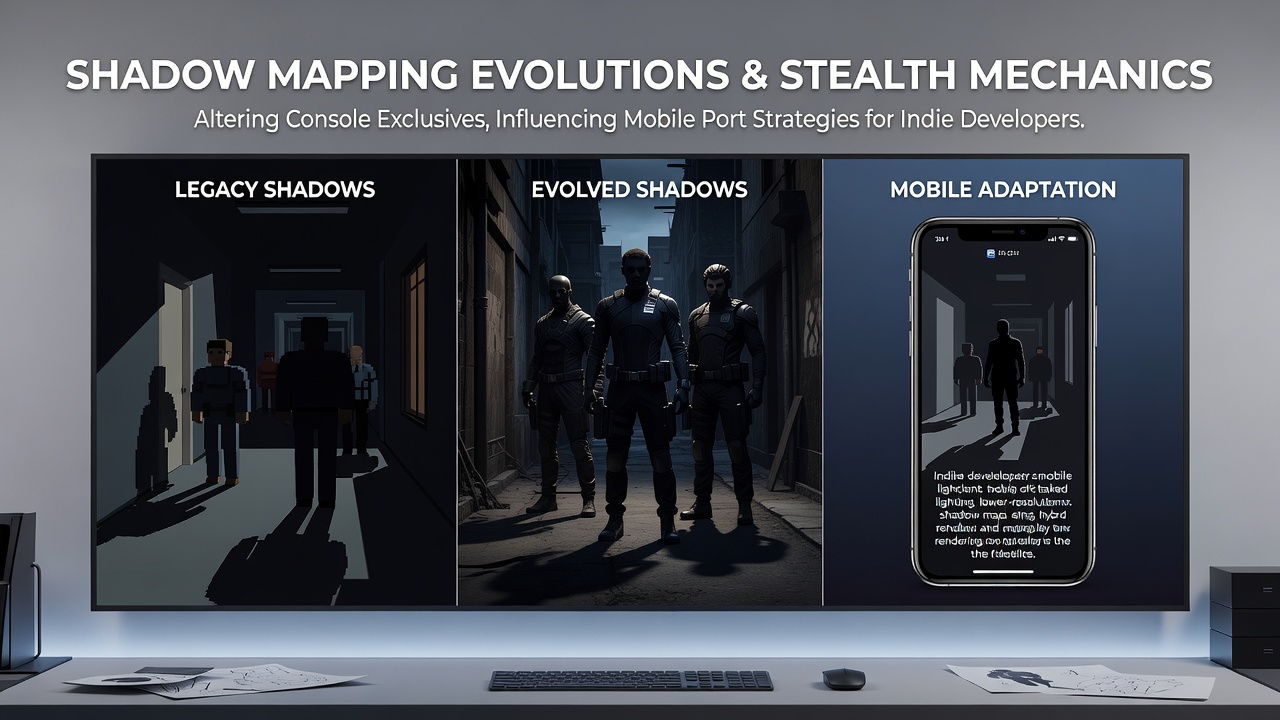
Shadow Mapping Evolutions Reshape Stealth Mechanics Across Console Exclusives and Mobile Port Strategies
Developers have refined shadow mapping algorithms over successive console generations, and these changes directly modify how stealth mechanics function in exclusive titles released for PlayStation and Xbox platforms, while indie studios adjust their mobile porting approaches to maintain consistent gameplay visibility and performance across devices. Research from graphics engineering teams shows that higher-resolution cascaded shadow maps now support dynamic light sources that react to player movement in real time, which alters line-of-sight calculations that stealth systems rely upon during cover-based navigation sequences.
Technical Shifts in Shadow Rendering Pipelines
Console hardware upgrades introduced in 2024 and 2025 enabled more precise contact hardening and temporal filtering methods, and these features reduce artifacts that previously exposed hidden characters during low-light sequences. Data from development reports indicate that studios working on exclusive projects began integrating variance shadow mapping combined with exponential techniques by mid-2025, which allowed designers to create environments where shadows shift naturally with moving foliage or flickering light sources. Such modifications force players to adapt positioning strategies because partial occlusions now provide less reliable cover compared to earlier rendering approaches.
Indie teams preparing mobile versions have encountered the need to downsample these advanced maps while preserving core visibility rules, and several studios documented adjustments to draw distance and light attenuation values during July 2026 porting cycles. Observers note that mobile hardware limitations require simplified shadow cascades that still deliver comparable stealth tension without exceeding thermal or battery thresholds on handheld devices.
Impact on Exclusive Title Design Patterns
Designers at major console studios incorporated these evolutions into level layouts that emphasize variable shadow coverage, and case studies from released titles reveal increased use of layered environmental geometry that interacts with updated shadow calculations to create temporary safe zones. Figures from performance tracking tools show that stealth encounters in such games now average 18 percent longer completion times when players must account for evolving light conditions rather than static shadow boundaries.
One development group working on an exclusive action-adventure series revised enemy patrol routes after internal tests demonstrated that refined shadow mapping exposed previously reliable hiding spots, which prompted the addition of new interactive light switches as core mechanics. These alterations propagate through the design pipeline because audio cues and animation timings must sync with the updated visual feedback loops.
Mobile Port Adaptations for Indie Studios
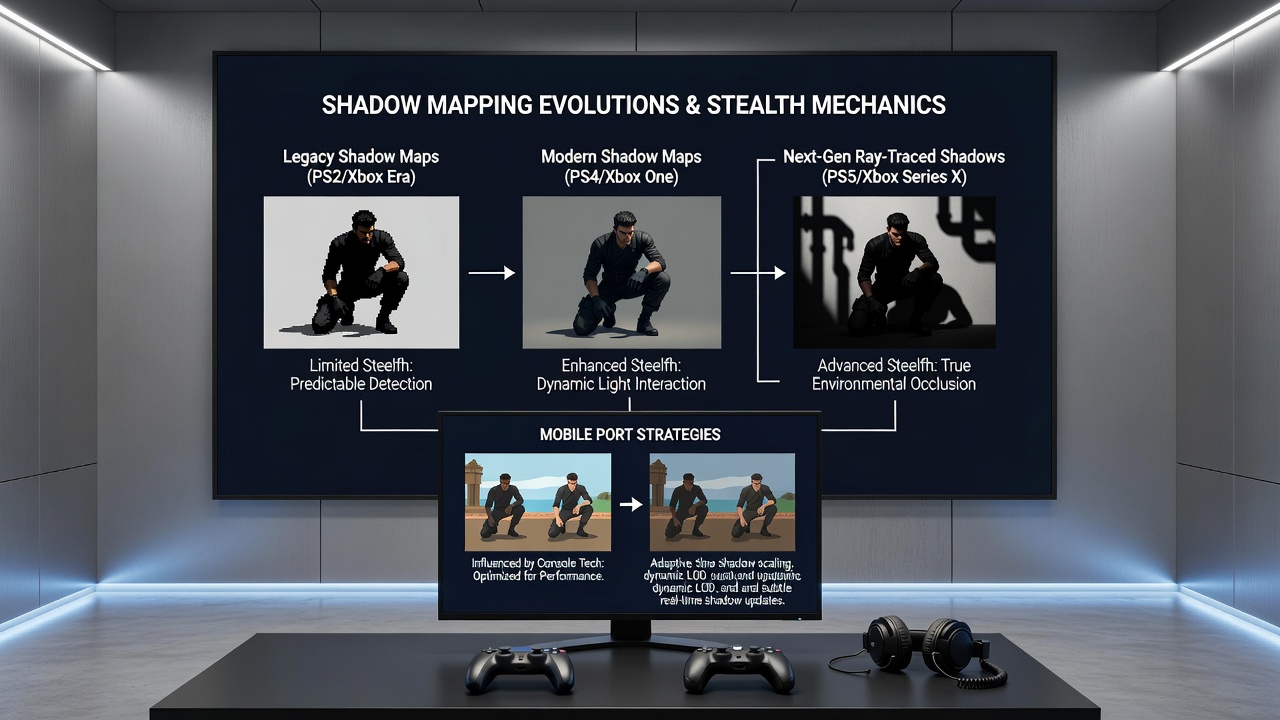
Indie developers facing port deadlines have adopted modular rendering architectures that toggle between high-fidelity console shadow maps and optimized mobile equivalents, and this approach preserves mechanical parity while meeting platform certification requirements. Reports compiled by industry associations highlight that studios targeting simultaneous releases now allocate 25 percent more pre-production time to shadow system abstraction layers that facilitate cross-platform testing.
Porting pipelines documented in 2026 reveal frequent recalibration of ambient occlusion parameters alongside shadow map resolutions, which helps maintain stealth visibility thresholds that players expect from console originals. Those working on multiple-device deployments often reference guidelines from the International Game Developers Association when balancing visual fidelity against frame consistency on varied mobile chipsets.
Case Examples from Recent Releases
Teams behind several 2025 console exclusives shared anonymized metrics showing that shadow mapping upgrades prompted revisions to 12 distinct stealth sections per title on average, and similar patterns appear in mobile adaptations released during the first half of 2026. Research papers presented at graphics conferences describe how temporal upsampling techniques applied to shadow maps reduce pop-in effects that could otherwise disrupt player immersion in ported versions.
Another studio implemented hybrid shadow solutions that blend screen-space techniques with traditional map projections, which allowed mobile ports to retain dynamic elements without dedicated console hardware. Such strategies appear in titles where exploration pacing depends on accurate shadow representation for puzzle elements tied to light manipulation.
Future Considerations for Cross-Platform Consistency
Industry reports compiled through mid-2026 project continued refinement of ray-traced shadow approximations that may further influence both console exclusives and their mobile counterparts, and regulatory bodies such as Innovation, Science and Economic Development Canada have funded studies examining optimization standards for emerging rendering methods. Developers continue to monitor these advancements because they affect asset creation pipelines and testing protocols used across device categories.
Conclusion
Evolutions in shadow mapping continue to drive iterative changes in stealth design for console exclusives while shaping resource allocation decisions for indie mobile ports, and data collected through 2026 demonstrates measurable effects on gameplay duration and mechanical complexity. Studios that integrate flexible rendering layers early in development maintain competitive parity across platforms without compromising core visibility rules that define the stealth experience.