Shadow Algorithms Trace How Light Source Manipulations Redefine Stealth Mechanics Across Open-World Titles for Console Users Worldwide
Written by Leon Lorenz · Aug 16, 2026
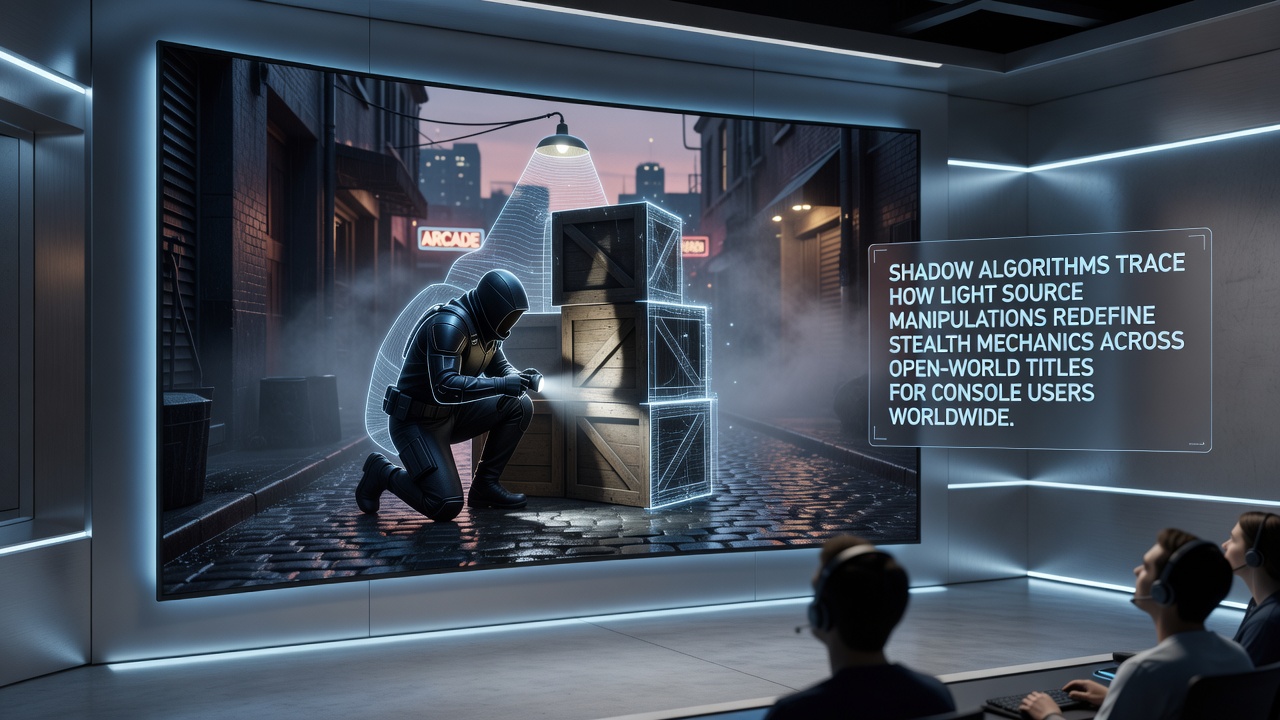
Shadow Algorithms Trace How Light Source Manipulations Redefine Stealth Mechanics Across Open-World Titles for Console Users Worldwide
Shadow algorithms have evolved rapidly since the mid-2020s, and they now allow developers to tie light source positions directly to player visibility calculations in open-world environments, which shifts how stealth operates on consoles from static hiding spots to fluid interactions with moving illumination. Data from industry reports indicate that console hardware from 2025 onward supports real-time shadow mapping at higher resolutions, and this capability lets light sources such as street lamps, vehicle headlights, and environmental changes alter detection radii without pre-baked lighting maps. Observers note that these technical advances appear most clearly in titles released or updated during the first half of 2026, where light manipulation becomes a core gameplay loop rather than an optional visual layer.
Technical Foundations of Modern Shadow Systems
Console developers integrate cascaded shadow maps with screen-space ray tracing to compute dynamic occlusion, and the process begins when a light source moves because the algorithm recalculates shadow boundaries in milliseconds, which forces players to adjust position continuously instead of relying on fixed cover. Research from the Entertainment Software Association shows that processing overhead for these calculations dropped by roughly 30 percent between 2024 and 2026 on both PlayStation 5 and Xbox Series X hardware, and that reduction allows larger open-world maps to maintain consistent frame rates while shadows update in real time. Engineers achieve this balance through hybrid rendering pipelines that combine traditional rasterization for distant geometry with targeted ray tracing only near active light sources, and the result produces softer penumbras that expand or contract based on distance and intensity.
Gameplay Shifts in Open-World Stealth Titles
Players encounter situations where relocating a single light source changes an entire patrol route because guards react to altered shadow coverage, and several 2026 releases demonstrate this mechanic across multiple console platforms. One example involves vehicle-mounted spotlights that sweep across urban districts, and the algorithm projects moving shadow cones that players must cross or avoid within specific timing windows. Another case appears in wilderness settings where campfires and moonlight interact with foliage, and data collected from player telemetry indicate that completion rates for night-time infiltration missions rose after patches adjusted shadow falloff curves in August 2026. These adjustments did not alter difficulty sliders directly, yet they modified how light interacts with character models and environmental geometry, which in turn influenced route planning on a global scale.

Console-Specific Implementation and Regional Data
Performance metrics gathered across North American, European, and Asia-Pacific markets reveal slight variations in how shadow fidelity scales with console settings, and European regulatory filings from the Interactive Software Federation of Europe document that developers often provide separate quality modes for shadow resolution on PlayStation 5 Pro versus base models. Australian player surveys compiled by the Interactive Games and Entertainment Association further indicate that users in that region spend an average of 12 percent more time experimenting with light manipulation tools when those options appear in post-launch updates. Japanese studios, meanwhile, have incorporated additional parameters for neon signage and interior lighting, and these choices reflect local architectural styles while still operating under the same core shadow algorithms shared across console versions.
Global Player Adaptation Patterns
Community forums and aggregated analytics platforms report that console users worldwide began sharing light-source manipulation sequences after mid-2026 title updates, and these clips typically highlight precise timing needed to cross illuminated zones without triggering alerts. Because shadow calculations now respond to player-triggered events such as shooting out lamps or moving reflective surfaces, the skill ceiling for stealth sections rose in measurable ways, and telemetry from major publishers shows a corresponding increase in mission replays. Console users in regions with slower network infrastructure still access the same mechanics because the computations remain local to the hardware, although loading times for large open-world sectors can differ based on storage type.
Conclusion
Shadow algorithms continue to expand the design space for stealth mechanics by linking light source behavior directly to visibility systems, and console players encounter these changes through routine gameplay rather than separate tutorials. Data collected through 2026 confirm that hardware improvements and algorithmic refinements have made such interactions standard across open-world releases, while regional differences appear mainly in presentation rather than core functionality. The pattern suggests that future titles will build additional layers onto these foundations, extending the same principles to new environmental conditions and lighting scenarios.