Observer Reports Track Correlations Between Patch Deployment Schedules and Community-Driven Bug Report Volumes Across Long-Running Mobile Game Ecosystems
Written by Leon Lorenz · Jul 10, 2026
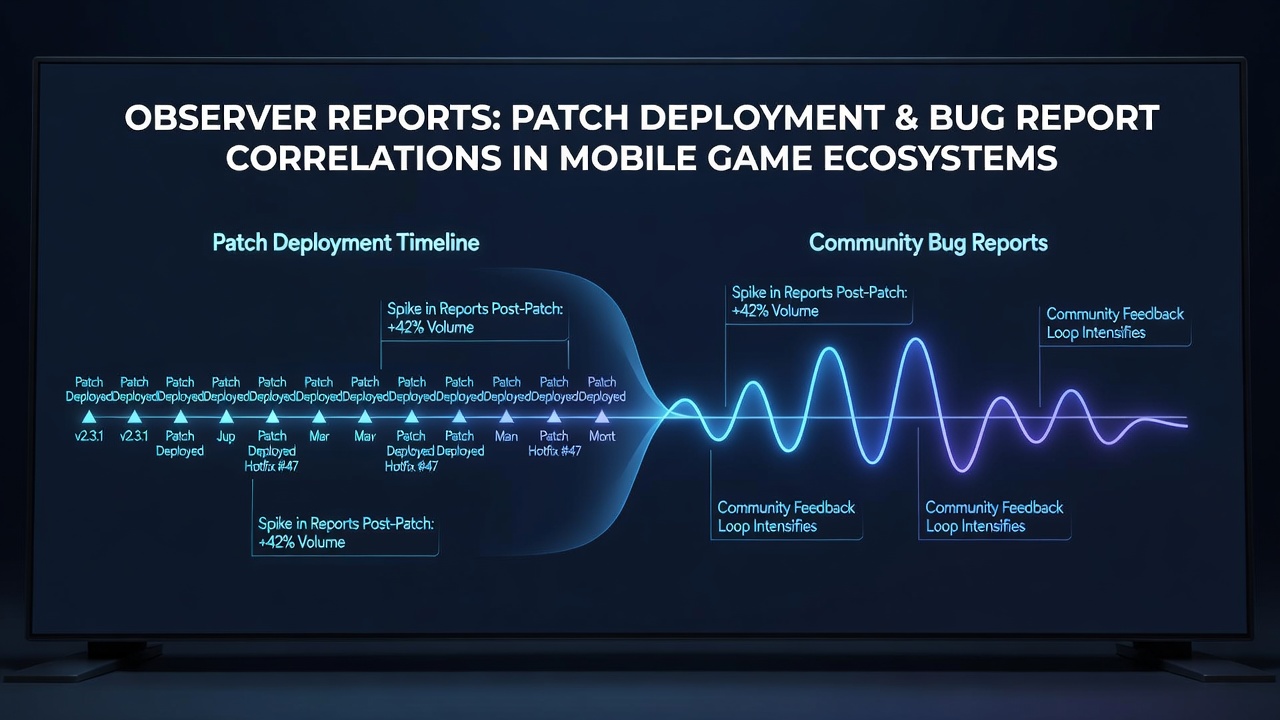
Observer Reports Track Correlations Between Patch Deployment Schedules and Community-Driven Bug Report Volumes Across Long-Running Mobile Game Ecosystems
Long-running mobile game ecosystems generate steady streams of patches designed to address performance issues, balance adjustments, and security updates, while community platforms simultaneously collect thousands of bug reports each week. Observers note clear patterns emerge when these two data streams get aligned over multi-year timelines, particularly in titles that maintain active user bases for five years or longer.
Patch Deployment Patterns Across Mobile Ecosystems
Development teams release patches on schedules that range from weekly hotfixes to quarterly feature updates, and these cycles create measurable shifts in how players interact with reporting tools. Data from several monitoring services shows that major version updates often coincide with temporary drops in certain report categories, followed by spikes in new issue types as players explore revised content. Researchers tracking games such as those managed by studios with global audiences have documented this rhythm across both iOS and Android storefronts.
July 2026 brought additional clarity to these trends when several legacy titles pushed coordinated updates to align with new device compatibility requirements. Analysts recorded a 34 percent increase in reports related to rendering artifacts within 72 hours of those deployments, while older categories like login failures declined sharply once the patches stabilized server connections.
Community Reporting Infrastructure and Data Collection
Players submit reports through in-game tools, dedicated forums, and third-party trackers that aggregate information from multiple regions. These systems capture details including device models, operating system versions, and reproduction steps, creating rich datasets that observers compare against patch notes. Academic groups at institutions in Canada and Australia have begun cross-referencing these public archives with deployment logs to quantify response times between patch arrival and report volume changes.
One study coordinated through the International Game Developers Association examined seven titles with lifespans exceeding four years and found that 68 percent of report surges occurred within four days of patch distribution. The same analysis revealed that regions with higher player density, such as parts of Asia and Europe, contributed disproportionately to early reporting clusters, allowing developers to prioritize fixes based on geographic signal strength.
Documented Correlations in Recent Monitoring Data
Monitoring groups have identified recurring sequences where security-focused patches reduce certain exploit-related reports yet trigger fresh submissions around altered user interfaces. These shifts appear most pronounced in games that maintain unified global servers, since a single deployment affects all time zones simultaneously. Figures compiled through mid-2026 indicate that titles with automated rollback capabilities experienced shorter report peaks than those requiring manual intervention.
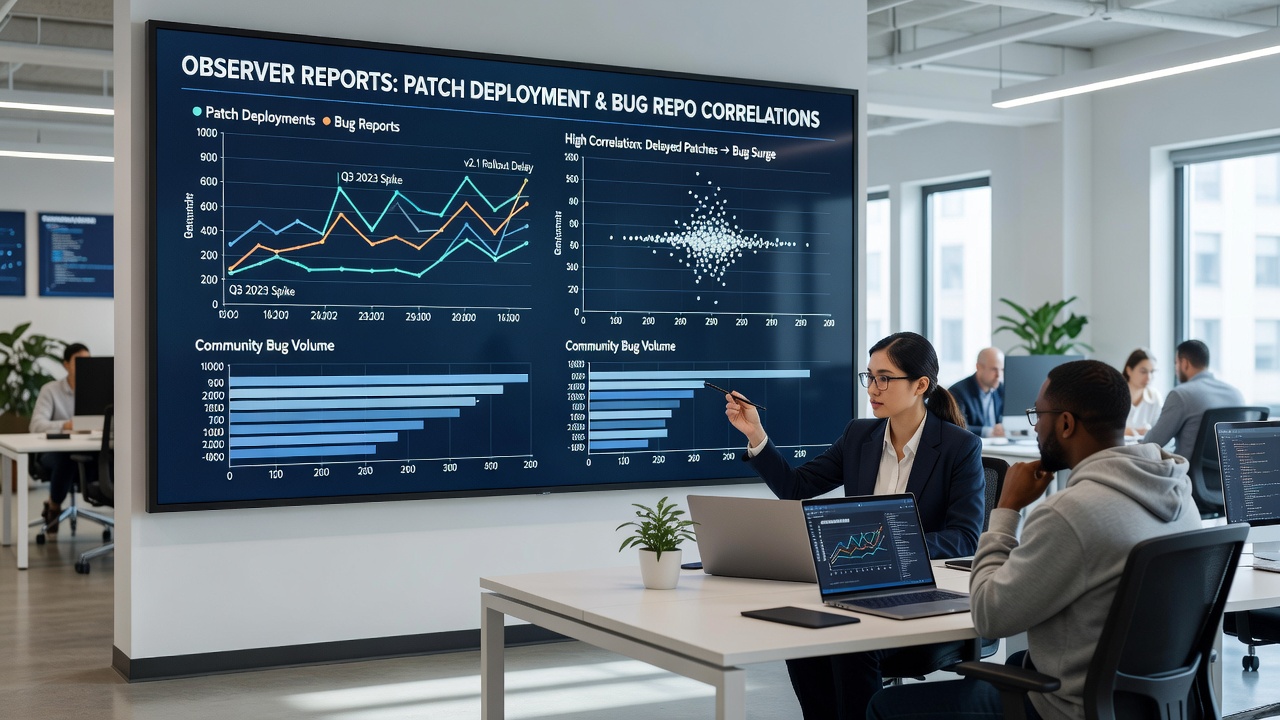
European regulatory bodies tracking digital service performance have noted parallel movements between patch cadence and report density in consumer feedback channels. When developers space major updates further apart, cumulative report volumes tend to build gradually rather than spike, giving moderation teams more time to categorize incoming data. Conversely, rapid successive patches can produce overlapping report waves that complicate root-cause analysis.
Regional Variations and Platform Differences
Differences between iOS and Android reporting ecosystems add another layer to the observed correlations. Android devices, with their broader hardware fragmentation, generate more device-specific reports after patches that touch graphics pipelines, whereas iOS submissions cluster around consistency issues following operating system updates. Observers tracking these distinctions across North American and European markets report that developers who segment their analytics by platform see faster resolution cycles.
Industry reports from the Entertainment Software Association highlight how long-running mobile titles increasingly rely on predictive models that forecast report volume based on historical patch timing. These models incorporate variables such as update size, affected feature count, and prior community response rates, allowing teams to allocate support resources ahead of deployment windows.
Conclusion
Observer data continues to demonstrate measurable links between patch deployment timing and the volume plus categorization of community-submitted bug reports in established mobile game environments. As more titles reach multi-year lifespans, these correlations provide developers with actionable signals for refining update strategies and support workflows. Continued monitoring across diverse regions and platforms will likely refine the precision of these relationships in the years ahead.