Metadata from Digital Purchase Histories Illuminates Connections Between Marketing Campaigns and Player Retention in Various Genres
Written by Jonas Frank · Jun 19, 2026
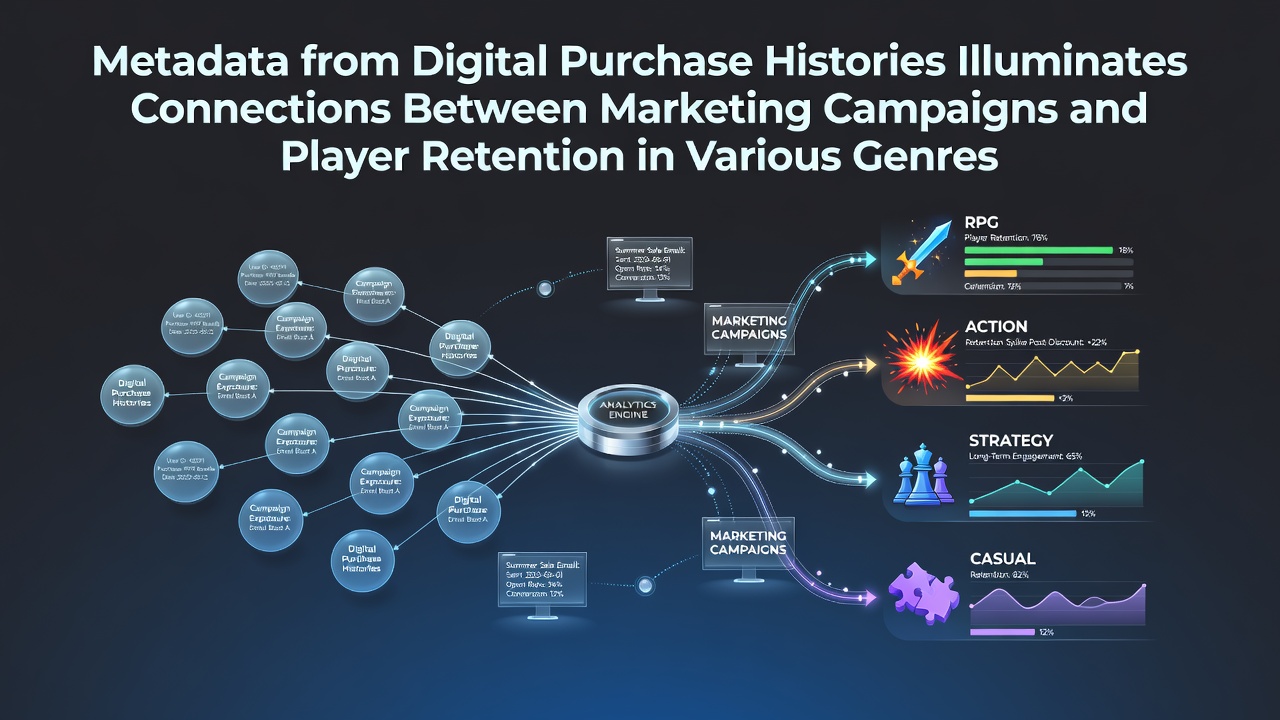
Metadata from Digital Purchase Histories Illuminates Connections Between Marketing Campaigns and Player Retention in Various Genres
Analysts examining metadata from digital purchase histories have identified measurable connections between marketing campaigns and player retention rates across multiple game genres, while data collected through storefront platforms and payment processors continues to provide granular details on transaction timing, campaign attribution, and subsequent engagement metrics.
Purchase records typically include timestamps, payment sources, promotional codes, and linked account identifiers that researchers cross-reference with gameplay logs to track how initial acquisition channels correlate with long-term activity, and this approach has gained traction as digital distribution dominates the market.
Data Sources and Analytical Approaches
Metadata sets drawn from major digital storefronts allow segmentation by genre categories such as action, role-playing, strategy, and simulation titles, whereas retention indicators often encompass total play hours, repeat login frequency, and additional content purchases within defined periods after the first transaction, according to aggregated reports from industry research bodies.
In June 2026, updates to data-sharing frameworks between platforms and third-party analysts expanded access to anonymized purchase sequences, enabling more precise mapping of campaign touchpoints onto retention curves without exposing individual user details.
Genre Variations in Campaign Impact
Action-oriented titles frequently show elevated retention when marketing emphasizes limited-time bundles or early-access incentives, while role-playing games demonstrate stronger links between narrative-focused trailers and sustained quest completion rates tracked through purchase follow-up data.
Strategy and simulation genres exhibit different patterns where community-driven promotions and expansion pack cross-sells align with extended session lengths, and mobile titles within these categories often record higher repeat purchase rates following targeted in-app offer sequences derived from prior transaction metadata.
Marketing Channel Attribution Findings
Campaign metadata reveals that social media advertisements and influencer partnerships produce distinct retention signatures compared with email newsletters or platform-curated recommendations, since purchase histories tag the originating referral source and subsequent activity levels.
One analysis of European transaction records indicated that players acquired through genre-specific influencer content maintained higher average engagement windows in multiplayer formats, whereas direct platform promotions correlated more closely with single-player retention across console and PC libraries.

North American data sets further separate outcomes by age demographics and device type, showing that console purchasers responding to seasonal sales events often extend playtime when follow-up content updates match the original campaign themes.
Regional and Platform Differences
Studies compiled by the Entertainment Software Association document how regional storefront policies affect metadata granularity, with variations in data fields available from North American versus Asian platforms influencing the resolution of campaign-retention correlations.
Australian industry reports compiled through the Interactive Games and Entertainment Association highlight platform-specific differences, noting that mobile ecosystems generate denser purchase sequences than traditional console channels and thereby yield tighter statistical associations between promotional timing and retention milestones.
Observed Retention Thresholds
Threshold analyses indicate that players who complete a second purchase within thirty days of the initial transaction exhibit measurably extended active periods, and metadata tags from marketing campaigns allow classification of which promotional mechanics most reliably trigger that second acquisition across examined genres.
Researchers tracking these sequences note that bundle offers combining base game and season pass content produce stronger retention signals in narrative-driven categories than standalone discount codes, while competitive multiplayer titles respond more consistently to tournament-entry incentives logged in purchase histories.
Conclusion
Metadata derived from digital purchase histories continues to supply actionable correlations between marketing campaigns and player retention across genres, supplying publishers and platform operators with quantitative frameworks for evaluating campaign effectiveness without reliance on self-reported surveys.
Ongoing refinements to attribution models and expanded data partnerships are expected to sharpen these connections as transaction volumes grow through 2026 and beyond.