Mapping the Shift from Physical Media to Digital Downloads and Its Effects on Game Preservation Efforts by Enthusiasts Worldwide
Written by Tina Bennett · Aug 26, 2026

Mapping the Shift from Physical Media to Digital Downloads and Its Effects on Game Preservation Efforts by Enthusiasts Worldwide
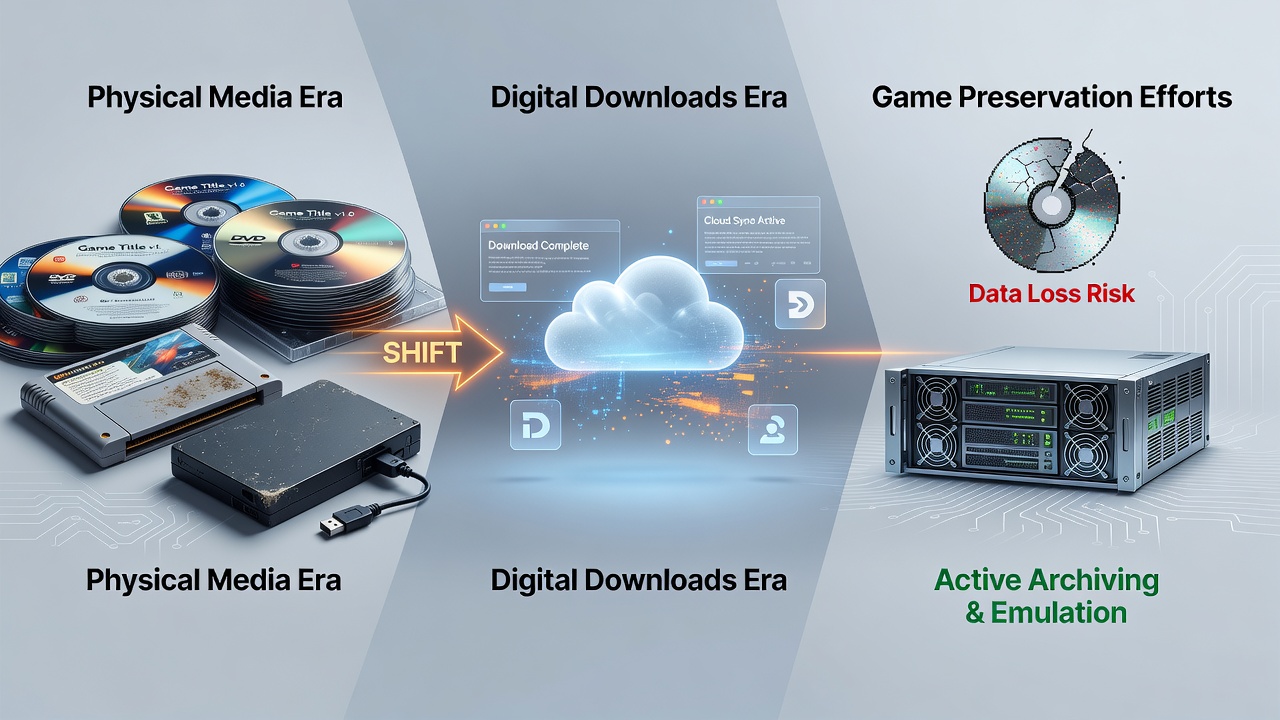
Retail data compiled across major markets shows physical game sales dropping from roughly 55 percent of total units in 2015 to under 20 percent by mid-2026, while digital downloads now account for the majority of revenue on platforms such as Steam, PlayStation Network, and Nintendo eShop. This transition accelerated after several console generations removed optical drives from base models, leaving only digital storefronts as the primary distribution channel. Observers note that publishers cite lower manufacturing costs and reduced piracy risks as primary drivers behind the change, yet the same shift has created new obstacles for long-term access to older titles.
Platform Policies and Access Limitations
Digital storefronts operate under license agreements rather than outright ownership, which means purchased games can disappear from accounts when publishers withdraw licenses or when server infrastructure is decommissioned. Multiple instances occurred between 2020 and 2025 where entire catalogs vanished following licensing disputes, leaving players without local copies. Researchers at institutions tracking software longevity have documented how these removals affect availability of mid-tier titles that never received physical releases in certain regions. Enthusiasts attempting to maintain personal archives therefore face repeated account verification hurdles and region-locked downloads that complicate systematic preservation.
Technical Barriers Introduced by Digital Distribution
Modern digital releases frequently incorporate always-online checks, hardware-bound encryption, and update dependencies that tie functionality to specific server responses. When support ends, these layers can render previously purchased software unplayable even if the files remain on local storage. Data from preservation projects indicates that games released after 2018 require significantly more reverse-engineering effort to create standalone backups compared with earlier optical media. Enthusiast groups have responded by developing custom firmware tools and offline patch repositories, though these efforts operate in legal gray areas across different jurisdictions.
Community-Led Preservation Initiatives
Worldwide networks of hobbyists and academic researchers have established decentralized archives that focus on extracting and documenting digital titles before delisting occurs. One ongoing effort coordinated through university-affiliated labs collects checksum-verified copies alongside metadata such as update histories and regional variants. These collections supplement earlier work on cartridge and disc imaging, yet they require continuous monitoring of storefront changes announced each fiscal quarter. In August 2026 several independent teams released updated catalogs covering over 12,000 mobile and PC titles that had become unavailable through official channels during the preceding year.
According to records maintained by the Library of Congress digital preservation program, software with no physical counterpart now constitutes the fastest-growing category of at-risk media. Parallel projects in Canada through Library and Archives Canada have begun ingesting selected digital-only releases under legal deposit frameworks, providing a model that other national institutions are studying. These government-backed repositories operate alongside enthusiast communities that prioritize speed and breadth, often filling gaps left by slower institutional processes.
Regional Differences in Legal Frameworks
Legislation governing circumvention of digital rights management varies sharply by country, influencing the scope of what enthusiast groups can publicly share. Jurisdictions with broader exceptions for interoperability research permit wider distribution of preservation tools, while stricter regimes confine activity to private collections. International coordination therefore relies on encrypted forums and mirrored servers hosted in multiple locations to maintain redundancy. Figures released by the European Commission's digital cultural heritage initiative reveal that cross-border collaboration has increased 40 percent since 2023, driven largely by shared concerns over disappearing mobile game libraries.
Long-Term Implications for Historical Research
Historians studying interactive media increasingly depend on enthusiast-supplied materials because official publisher archives remain incomplete or inaccessible. Without physical copies or verified digital images, certain gameplay mechanics and regional content variations risk permanent loss. Projects that combine emulator development with metadata standards help reconstruct context around preserved files, allowing future researchers to understand both the software and the hardware ecosystems that supported it. Continued monitoring of storefront policy changes remains essential, since each new console generation introduces fresh technical restrictions that must be addressed before titles enter the public domain decades later.
Conclusion
The ongoing migration from physical cartridges and discs to digital-only distribution has reshaped the practical work of game preservation, requiring enthusiasts to adapt techniques originally developed for tangible media. Coordinated efforts among hobbyist networks, academic institutions, and select national archives continue to document titles that would otherwise vanish when licenses expire or servers close. Sustained attention to both legal pathways and technical standards will determine how complete the historical record of interactive entertainment remains for subsequent generations.