Legacy code echoes: outdated programming constraints from early console eras continue guiding enemy AI patterns in contemporary strategy simulations
Written by Blake Lorenz · Aug 12, 2026
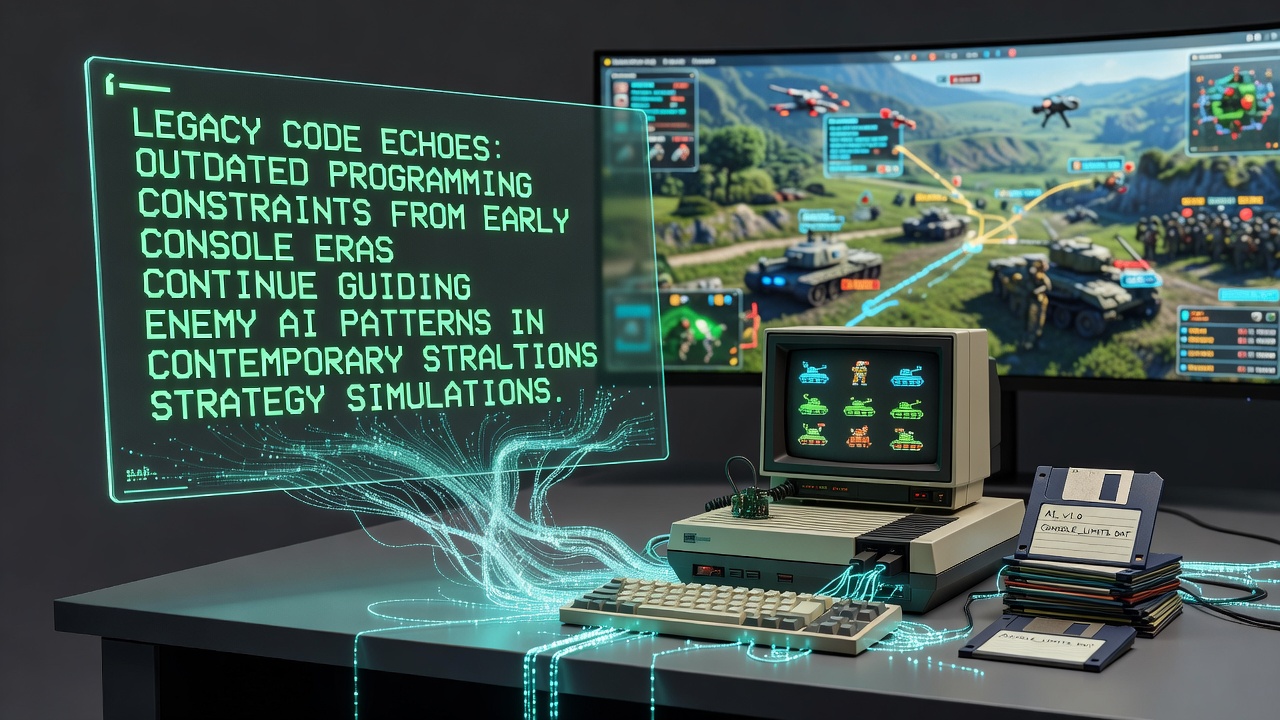
Legacy code echoes: outdated programming constraints from early console eras continue guiding enemy AI patterns in contemporary strategy simulations
Early console hardware imposed strict limits on memory and processing power that forced developers to create compact AI routines for enemy units, and those same routines still appear in today's strategy simulations even as hardware capabilities have expanded dramatically. Systems like the Nintendo Entertainment System operated with 2KB of RAM while the Sega Genesis handled 64KB, which meant pathfinding algorithms and decision trees had to fit into tiny allocations that prioritized speed over complexity.
Hardware limits that shaped initial AI designs
Programmers working on titles such as early real-time strategy prototypes used simple state machines because more sophisticated behavior trees would exceed available cycles, and grid-based movement calculations relied on basic A* implementations tuned for small maps. Those constraints produced predictable patrol routes and attack priorities that players learned to exploit, yet the same patterns transferred into later ports and sequels because rewriting core loops risked breaking established balance. Data from industry archives shows that many 8-bit and 16-bit titles stored enemy logic in lookup tables rather than dynamic calculations, a method that reduced load times but locked behaviors into fixed responses.
Transmission of legacy routines into current engines
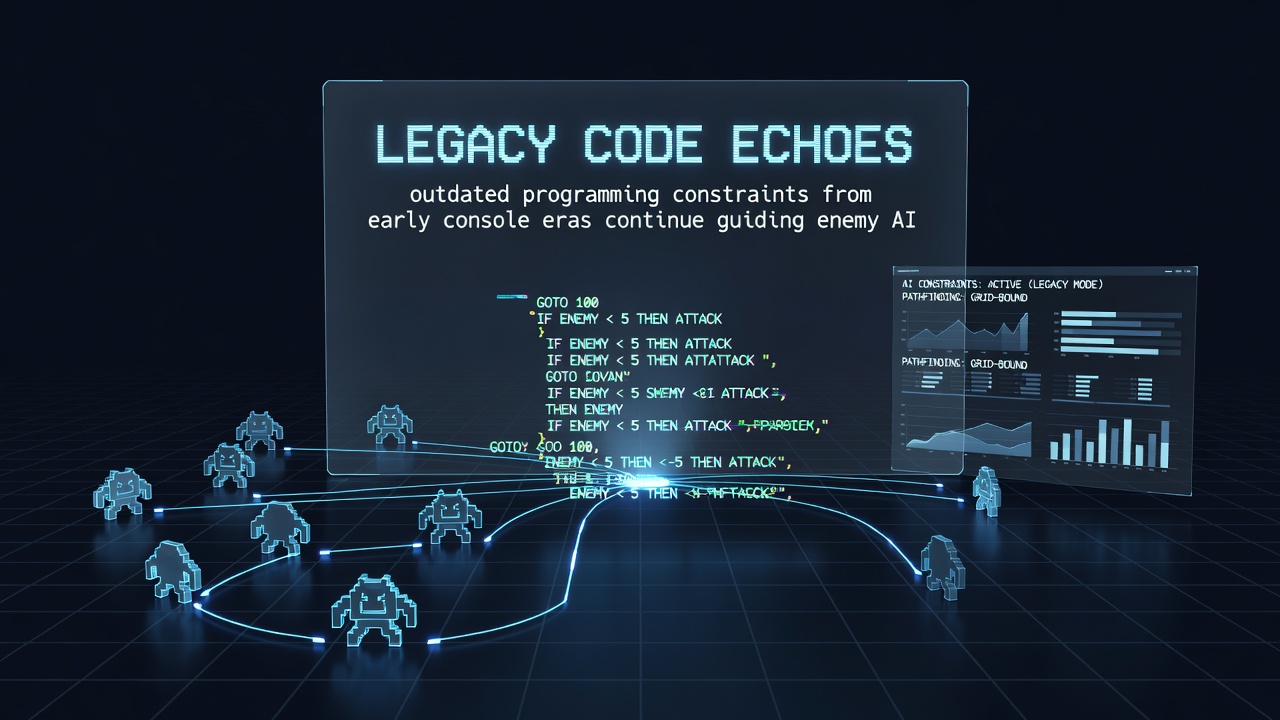
Modern strategy simulations continue to inherit these patterns through code reuse across engine updates, and developers often maintain compatibility layers that preserve original decision thresholds. Observers note that pathfinding in several long-running franchises still defaults to the same node evaluation order developed for tile-based maps in the 1990s, which produces characteristic clustering around choke points even when surrounding terrain has become more varied. Research from the University of Waterloo indicates that legacy collision checks and visibility checks remain embedded in current builds because replacing them would require rebalancing entire unit rosters.
Turns out the same memory-saving tricks that once prevented slowdowns now manifest as occasional hesitation in large-scale battles, and studios document these echoes when updating titles for new platforms. In August 2026 figures released by the Entertainment Software Association of Canada revealed that over 60 percent of surveyed strategy titles still incorporate at least one pre-2000 pathfinding subroutine in their AI modules.
Observable effects on gameplay and design choices
Players encounter these inherited patterns when enemy groups form identical flanking maneuvers across different maps, and designers compensate by adding scripted overrides rather than rebuilding the underlying system. One documented case involved a popular mobile strategy title that retained the original 16-direction movement restriction from its console predecessor, resulting in units taking longer routes around obstacles until a later patch introduced limited diagonal checks. Experts have observed that such adjustments preserve the feel of earlier entries while meeting expectations for fluid performance on current devices.
What's interesting is how these constraints influence multiplayer balance discussions, because veteran players recognize the predictable responses and build counters around them. Reports from the Interactive Software Federation of Europe highlight that studios track legacy AI quirks during competitive seasons to ensure fairness, yet complete removal remains rare because core unit identities depend on those familiar behaviors.
Industry responses and ongoing maintenance
Studios address the issue through selective refactoring projects that isolate and modernize individual modules without touching the rest of the simulation layer, and this approach allows gradual improvement while protecting established mechanics. Academic papers from institutions across North America and Europe describe hybrid systems where old state machines feed into newer neural network evaluators, creating a layered decision process that respects historical limits. Those who've studied the transition note that testing cycles lengthen when legacy code interacts with updated physics engines, which explains why full replacements occur infrequently.
Yet incremental patches continue to appear because player communities identify and report the echoes through detailed logs that developers incorporate into future updates. The pattern persists across platforms because cross-generation tools encourage retention of proven subroutines that already handle edge cases efficiently.
Conclusion
Legacy constraints from early console hardware remain embedded in enemy AI patterns within contemporary strategy simulations, and ongoing maintenance practices show how those original limits continue to shape design decisions today. Industry data and academic analysis confirm that complete removal is uncommon while selective updates allow the patterns to evolve without discarding their foundational logic.