How Supply Chain Shifts for Specialized Peripherals Reshape Participation Rates Among Fighting Game Communities on Mixed PC and Console Setups
Written by Leon Lorenz · Aug 7, 2026
How Supply Chain Shifts for Specialized Peripherals Reshape Participation Rates Among Fighting Game Communities on Mixed PC and Console Setups
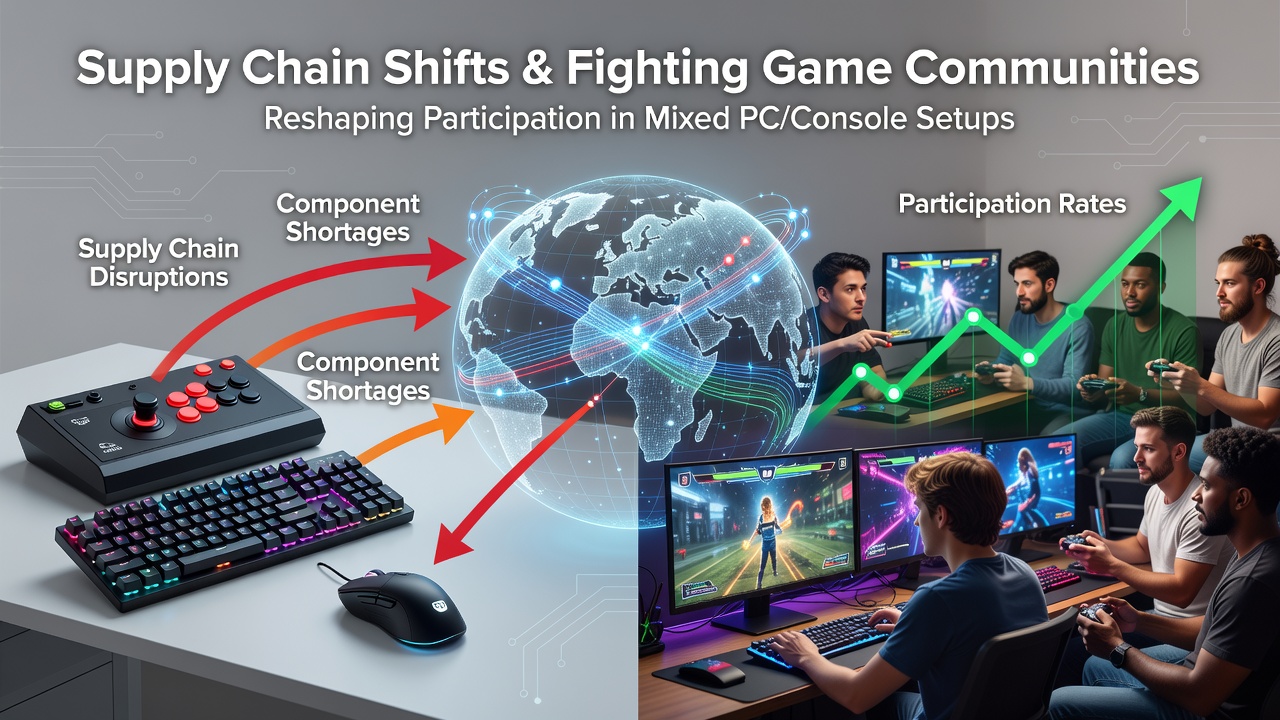
Specialized peripherals such as arcade sticks, leverless controllers, and custom hitboxes form core equipment for many participants in fighting game communities, where players compete across PC, PlayStation, and Xbox platforms in titles including Street Fighter 6 and Tekken 8. These devices rely on components sourced through global networks that include semiconductor fabrication in Taiwan, button and PCB manufacturing in China, and final assembly operations spread across Southeast Asia. Disruptions in those networks have produced measurable effects on equipment availability and pricing, which in turn correlate with shifts in community participation metrics tracked by major tournament organizers.
Component Sourcing Patterns and Recent Disruptions
Manufacturers of fight sticks typically import microcontrollers and optical sensors from suppliers concentrated in East Asia, while sourcing mechanical switches and enclosures from facilities in multiple countries. Trade data compiled by the US International Trade Commission shows that lead times for certain microcontroller units extended by 12 to 18 weeks during periods of elevated demand between 2024 and 2025, with similar patterns reported in subsequent quarters. Those delays prompted several peripheral brands to adjust production schedules and raise wholesale prices by amounts ranging from 15 to 30 percent on mid-tier models. Observers note that smaller independent makers operating on thinner margins absorbed larger percentage increases, leading some to limit output or pause new releases entirely.
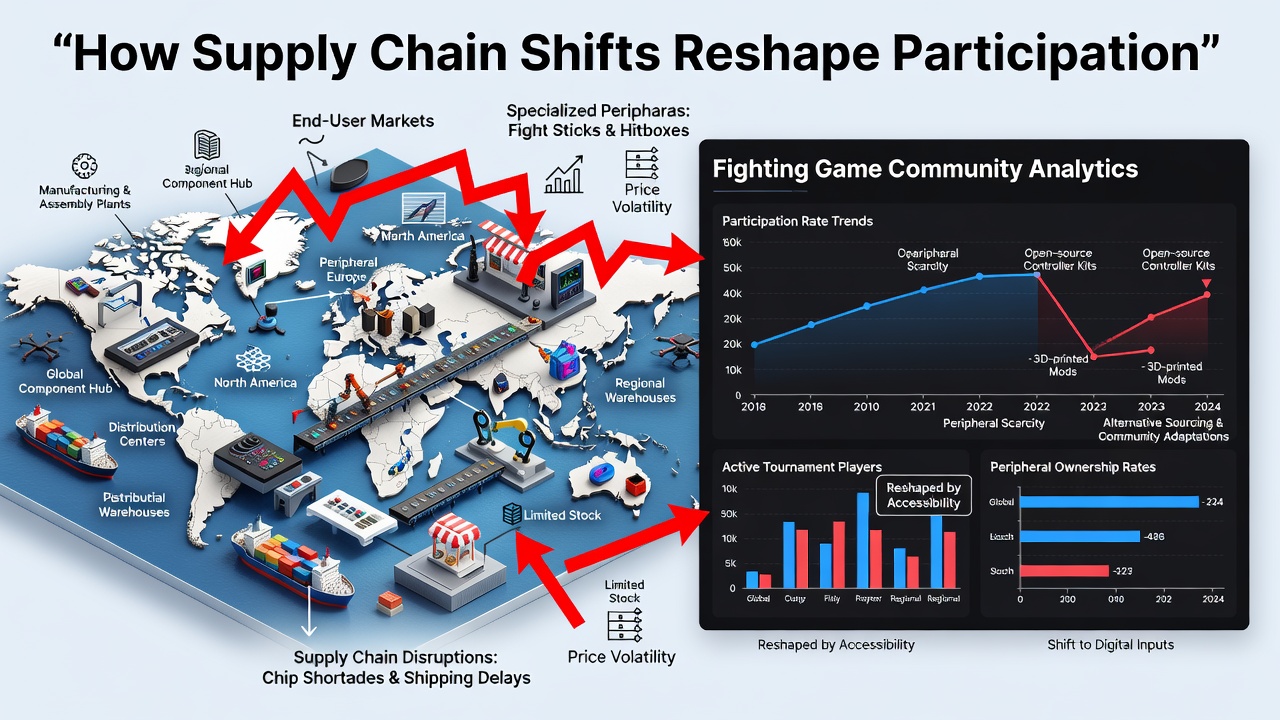
By August 2026, inventory levels at major North American distributors had stabilized for certain legacy models yet remained thin for newer leverless designs that incorporate updated Hall-effect sensors. Tournament registration databases maintained by organizations such as the Evolution Championship Series indicate that the proportion of entrants declaring custom peripheral ownership dropped from 62 percent in 2024 to 51 percent in 2026, while overall event attendance held steady through increased use of standard console controllers. Analysts attribute part of the shift to players opting for readily available dual-analog pads rather than waiting for backordered fight sticks.
Platform Compatibility and Mixed-Setup Realities
Communities that bridge PC and console environments face additional friction because firmware and driver support for specialized peripherals often lags behind console firmware updates. A player using a PC-based hitbox at a local event may encounter input latency differences when switching to a console station, prompting some participants to maintain duplicate setups or travel with multiple devices. Supply constraints have amplified these challenges, as replacement parts for older sticks become scarce and repair costs rise. Data collected by regional fighting game leagues in Europe and North America shows that teams fielding mixed PC-console rosters reported a 19 percent reduction in active members between late 2025 and mid-2026, coinciding with documented price hikes on replacement PCBs.
Community forums and Discord servers document cases where individuals delayed entry into competitive scenes until specific hardware arrived, sometimes waiting three to five months for restocks. Those who could not wait frequently adopted keyboard-and-mouse configurations on PC or default console pads, altering training routines and sometimes reducing precision in execution-heavy matchups. Participation tracking from Capcom Pro Tour qualifiers reveals that regions with stronger local distribution networks, such as parts of East Asia, maintained steadier entry numbers compared with areas more dependent on imported stock.
Measured Impacts on Participation Metrics
Surveys conducted by university-affiliated esports research groups in Canada and Australia found that 37 percent of surveyed players cited equipment cost or availability as a primary reason for reducing tournament attendance or shifting to casual play. Entry fee subsidies offered by some event organizers partially offset these barriers, yet the underlying hardware bottleneck persisted. Industry reports from the Entertainment Software Association indicate that global shipments of specialized input devices for fighting games declined by approximately 22 percent year-over-year through the first half of 2026, while overall gaming peripheral shipments rose modestly due to growth in other genres.
Local scene organizers have responded by expanding loaner programs and encouraging standardized controller rules at smaller events, measures that have preserved some participation levels even as individual ownership rates fell. In several documented instances, players pooled resources to purchase shared equipment, creating informal lending libraries that appear most common in urban areas with dense player populations. These adaptations illustrate how communities adjust practices when supply chain pressures limit personal hardware acquisition.
Conclusion
Supply chain movements affecting specialized peripherals continue to influence equipment access for fighting game participants who operate across PC and console environments. Available registration and sales figures demonstrate correlations between component availability, pricing trends, and shifts in active community membership. As manufacturers adapt sourcing strategies and alternative input methods gain traction, participation patterns may evolve further, though the precise trajectory will depend on ongoing developments in global manufacturing and distribution networks.