How Firmware Patches for Legacy Consoles Quietly Reshaped Glitch Exploitation Tactics Among Dedicated Speedrunners Worldwide
Written by Blake Lorenz · May 24, 2026

How Firmware Patches for Legacy Consoles Quietly Reshaped Glitch Exploitation Tactics Among Dedicated Speedrunners Worldwide
Speedrunning communities have long relied on precise glitch exploitation in classic titles, yet firmware revisions released for legacy hardware over the past decade forced measurable shifts in those approaches. Researchers tracking leaderboard data across multiple platforms note that patches targeting memory access and timing routines eliminated certain skips in games like The Legend of Zelda: Ocarina of Time and Super Mario 64, prompting runners to develop workarounds using unpatched cartridges or modified emulation environments. Those adjustments occurred quietly because updates often arrived through digital re-releases rather than direct console firmware pushes, yet the effects rippled through global competitions.
Early Patches and Initial Community Responses
Observers note that Nintendo's Virtual Console service introduced incremental fixes starting in the late 2000s, and these changes altered frame timing on titles originally designed for the Nintendo 64. Data from archived runs shows that several out-of-bounds clips became unreliable after the updates, so competitors began cataloging hardware revisions by serial number to identify units that retained original behavior. Similar patterns emerged with PlayStation re-releases on PS3 and PS4, where Sony applied stability patches that closed texture loading exploits in games such as Final Fantasy VII. Runners responded by maintaining collections of pre-patch discs and consoles, a practice that continues because verification rules on major tracking sites accept runs only from documented firmware states.
Adaptation Through Hardware and Software Tools
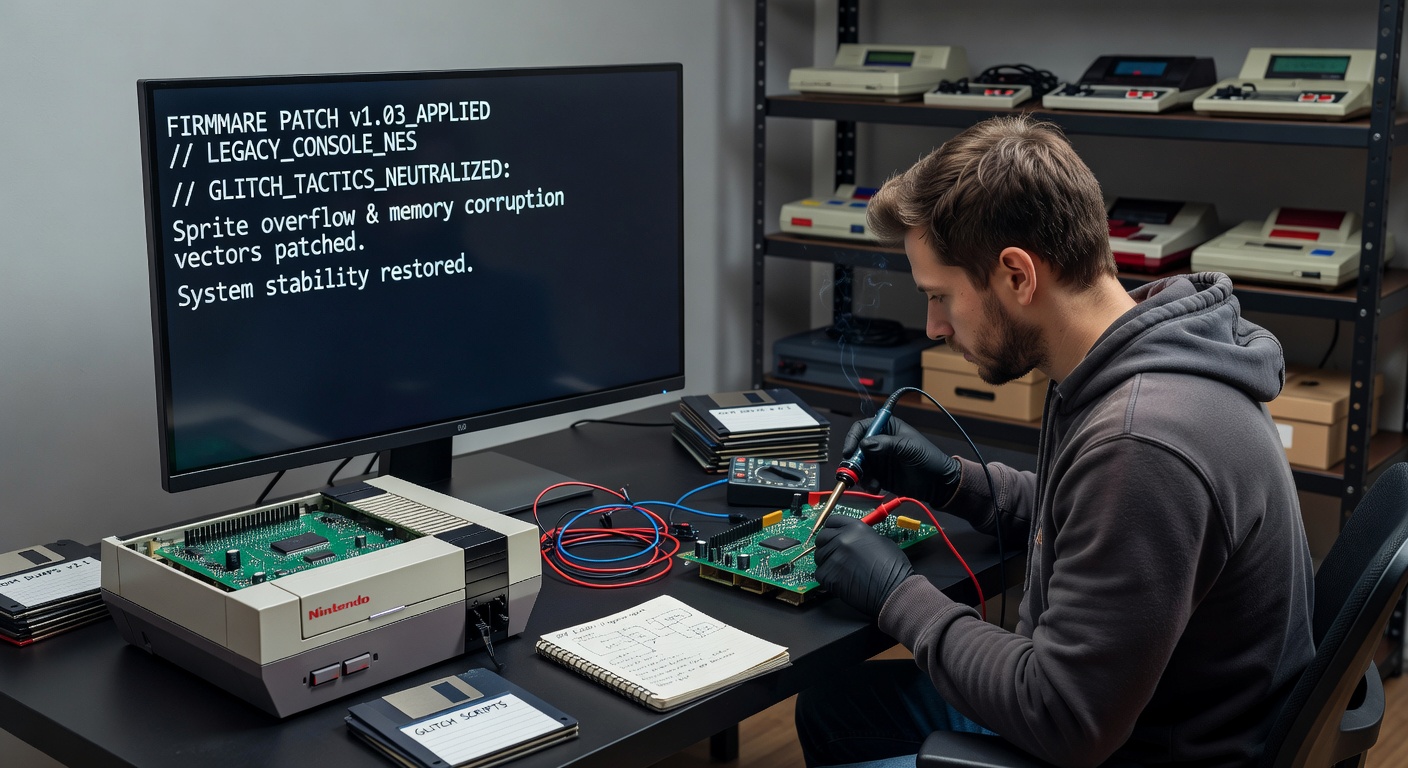
Communities developed systematic methods to bypass restrictions once patches rendered older routes obsolete. One common tactic involves custom firmware on original hardware that selectively disables update checks, allowing access to exploitable states without triggering anti-tamper measures. Another route uses capture cards paired with precise controller input devices to replicate glitch conditions on patched systems, though success rates vary by title. Studies compiled by academic groups focusing on digital preservation indicate that these adaptations require extensive testing cycles, often spanning months, because each new firmware revision introduces subtle changes to interrupt handling and memory allocation. Runners share spreadsheets documenting which console variants retain specific glitches, and this collaborative documentation grows whenever manufacturers issue maintenance releases for backward-compatible devices.
By May 2026, several emulation projects aligned with legacy console preservation efforts released updated cores that mirrored recent hardware patches, and this prompted fresh rounds of route optimization among top competitors. Those working with Super Metroid and Mega Man X found that collision detection tweaks eliminated wall clips previously used in any-percent categories, leading instead to reliance on damage-boost sequences that had remained untouched by the updates.
Impact on Leaderboards and Category Creation
Tracking platforms responded to these changes by introducing version-specific leaderboards that separate runs performed on patched versus unpatched systems. Figures published by speedrun.com reveal that many legacy titles now maintain parallel rankings, with the unpatched categories often retaining older world records while patched boards reflect newer strategies. This separation preserves competitive integrity because direct comparison between firmware states would otherwise distort time metrics. Industry reports from the International Game Developers Association highlight that such versioning practices have become standard for retro-focused events, reducing disputes during verification.
Broader Effects on Training and Documentation
Training regimens adapted as well because runners must now master multiple firmware profiles to remain competitive across different events. University research teams examining retro gaming communities have documented how detailed wikis and video archives track patch histories for hundreds of titles, creating reference materials that list exact console behaviors before and after each update. Those resources allow newcomers to identify viable routes quickly rather than rediscovering closed exploits through trial and error. The resulting knowledge base also supports tool-assisted speedrun development, where precise emulation settings replicate specific firmware states for frame-perfect analysis.
Conclusion
Firmware revisions continue to influence speedrunning practices because manufacturers periodically address compatibility issues in legacy hardware lines, and each adjustment narrows or expands available glitches. Communities maintain detailed records of hardware variants and software versions, ensuring that competitive standards remain consistent even as underlying systems evolve. This ongoing process demonstrates how technical maintenance on older platforms shapes modern play without drawing widespread public attention.