How Discarded Asset Archives Fuel Unexpected Revival Cycles for Early Mobile Strategy Titles on Modern Emulators and Legacy Consoles
Written by Blake Lorenz · Aug 30, 2026
How Discarded Asset Archives Fuel Unexpected Revival Cycles for Early Mobile Strategy Titles on Modern Emulators and Legacy Consoles
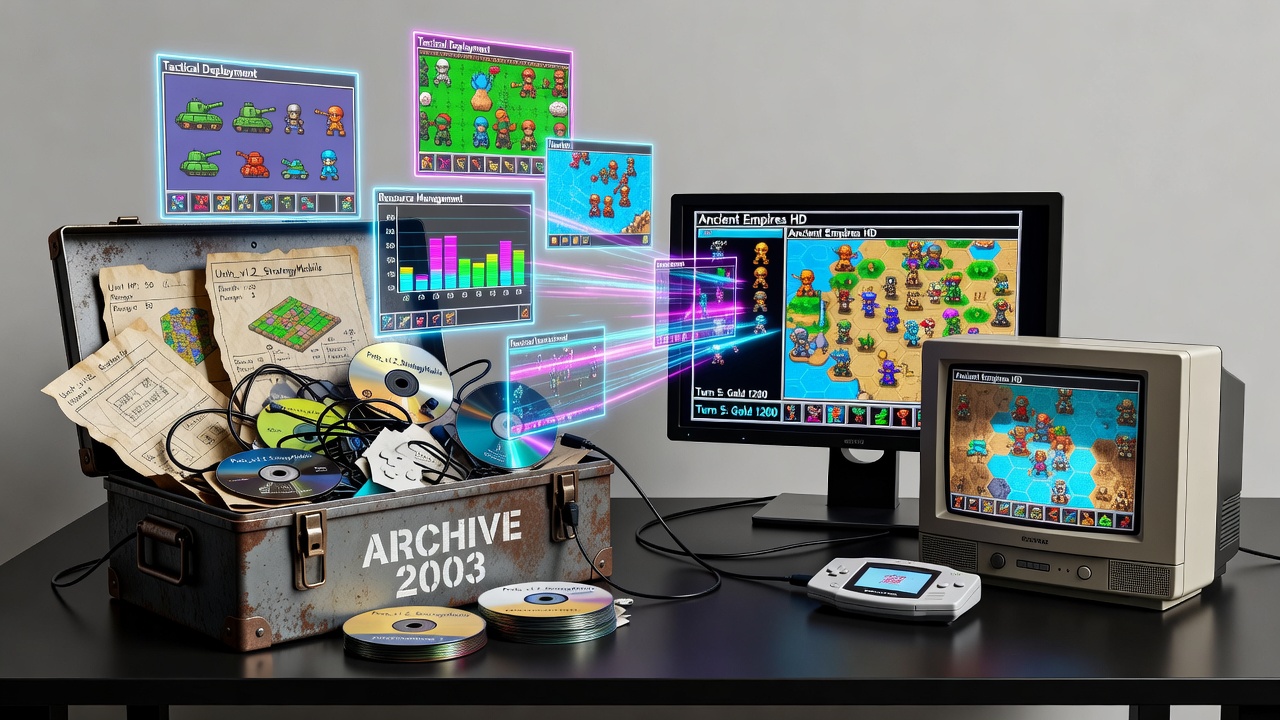
Early mobile strategy titles from the 2000s and 2010s often left behind scattered asset files when developers abandoned projects or shifted platforms, and those discarded archives now circulate through preservation networks that feed directly into emulator communities and homebrew scenes on legacy hardware. Observers note that developers originally created these files for devices with limited processing power, yet the same sprites, maps, and logic scripts transfer cleanly to modern emulation layers where enthusiasts reconstruct playable versions without starting from scratch. Research from digital preservation projects shows that asset dumps recovered from abandoned servers or old development kits provide complete sets of 2D graphics and turn-based mechanics that match the original mobile releases, allowing accurate ports rather than approximations.
Origins of Asset Recovery Networks
Archivists and hobbyist groups began collecting these files in the mid-2010s through public repositories and private backups, while developers released partial source materials during studio closures or licensing transitions. Data from university-led preservation studies indicates that strategy titles such as early tower defense and empire-building games frequently stored assets in simple formats that require minimal conversion, which accelerates the revival process once the files surface. Those who examine the archives often discover complete soundtracks and level layouts alongside unused content that original publishers never shipped, giving revival projects additional depth without new creation work.
By August 2026 preservation databases list thousands of such mobile strategy packages, and community efforts continue to verify file integrity before distribution to emulator teams. The process relies on checksum matching and original device specifications rather than guesswork, so recreated versions run at consistent frame rates across different host systems.
Emulator Platforms Drive Accessibility Gains
Modern emulator software accepts these archived assets through custom loaders that replicate the original mobile runtime environments, and users report stable performance on both desktop and handheld emulation hardware. Studies conducted by European gaming research centers reveal that strategy mechanics from early mobile games, including resource management loops and AI pathfinding routines, execute without modification once the asset files load correctly. Emulation layers handle input mapping and save-state functions that legacy mobile hardware never supported, which extends play sessions beyond the battery and network limits of the source devices.
Community forums document cases where complete asset sets from multiple related titles combine into larger campaigns, and the resulting projects maintain compatibility with standard controller profiles on current emulator builds. This integration happens because the original code structures were lightweight by design, allowing straightforward recompilation for broader hardware targets.
Legacy Console Homebrew Expands Reach
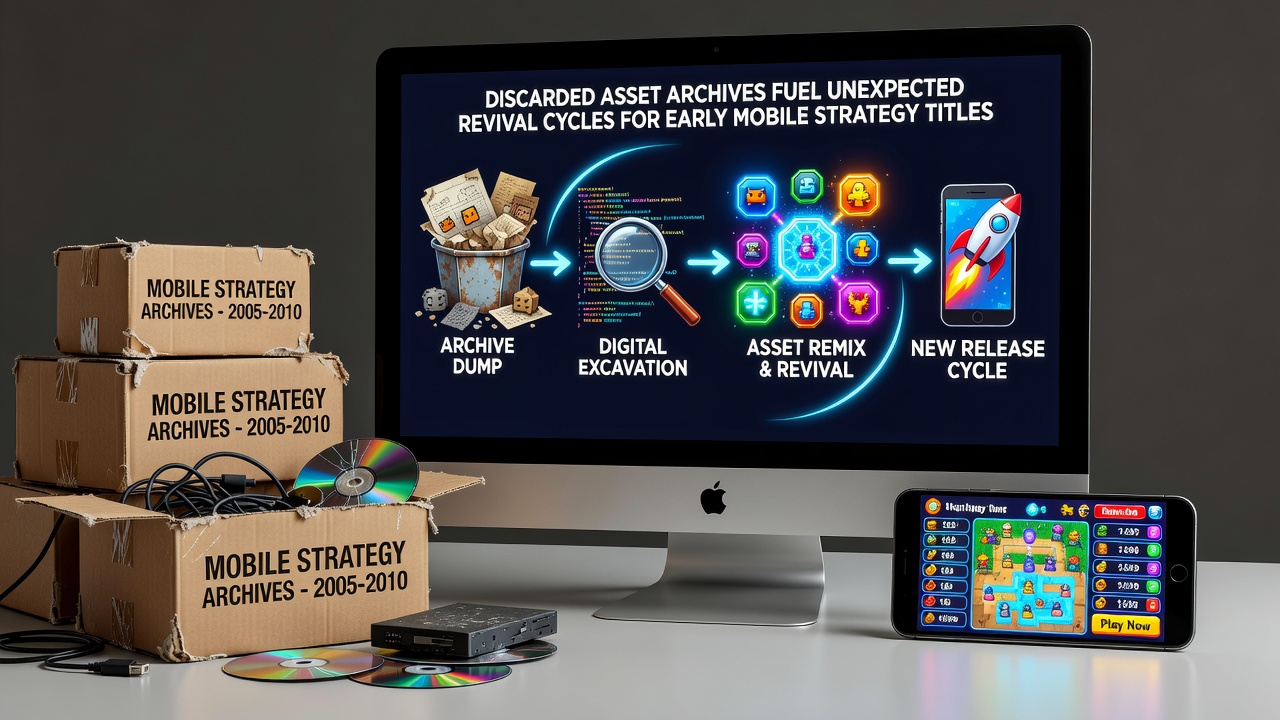
Legacy consoles receive these revived titles through homebrew cartridges and optical media modifications that accept the same archived asset collections, and hardware enthusiasts adapt the files to fit memory constraints of older systems. Figures from industry reports compiled by North American trade associations show that strategy games originally designed for touchscreens translate to button-based controls with only minor interface adjustments, preserving core gameplay loops. Developers working on these ports frequently reuse the original collision detection and turn timers, which reduces the technical barriers that once limited such cross-platform efforts.
One documented example involves a 2012 mobile empire builder whose complete asset archive reached console modders in 2024, resulting in a functional release for a 2006-era system by mid-2025. The project succeeded because the source files included both high-resolution and low-resolution variants, allowing automatic scaling to match the target display hardware without additional artwork.
Documentation and Verification Practices
Verification teams cross-reference recovered assets against original mobile release notes and patch histories to confirm accuracy before wider distribution, and academic researchers contribute by publishing checksum databases that prevent corrupted files from entering circulation. According to data released by an Australian digital heritage initiative, the volume of verified mobile strategy archives grew by more than 40 percent between 2023 and 2026, driven largely by contributions from former studio employees who retained development kits after company shutdowns. These records help maintain consistency across emulator and console versions, so players encounter identical unit behaviors and resource calculations regardless of the playback platform.
Additional resources appear at digitalpreservation.gov and through reports issued by the International Game Developers Association, which track how asset recovery influences ongoing preservation work across regions.
Conclusion
Asset archives from early mobile strategy titles continue to supply the raw materials for emulator and legacy console projects, and the resulting revival cycles operate on verified file sets that preserve original mechanics. Observers note that the lightweight design of these older games aligns well with current emulation and homebrew capabilities, which sustains the cycle as new archives surface each year. The pattern relies on established preservation practices rather than novel inventions, allowing consistent access to titles that would otherwise remain unplayable on contemporary hardware.