How Companion AI Behaviors Have Quietly Transformed Exploration Patterns in Long-Form Digital Adventures
Written by Leon Lorenz · May 31, 2026
How Companion AI Behaviors Have Quietly Transformed Exploration Patterns in Long-Form Digital Adventures
Long-form digital adventures have seen companion AI systems integrate more deeply into player routines over the past several years, and telemetry data collected across major titles shows measurable shifts in how users traverse open environments. These changes stem from AI routines that now prioritize contextual awareness, path suggestion, and independent action rather than simple following mechanics. Game studios began rolling out these updates in phases starting around 2023, with refinements continuing into spring 2026 as development teams incorporated player behavior logs from millions of sessions.
Core Shifts in Companion Decision-Making
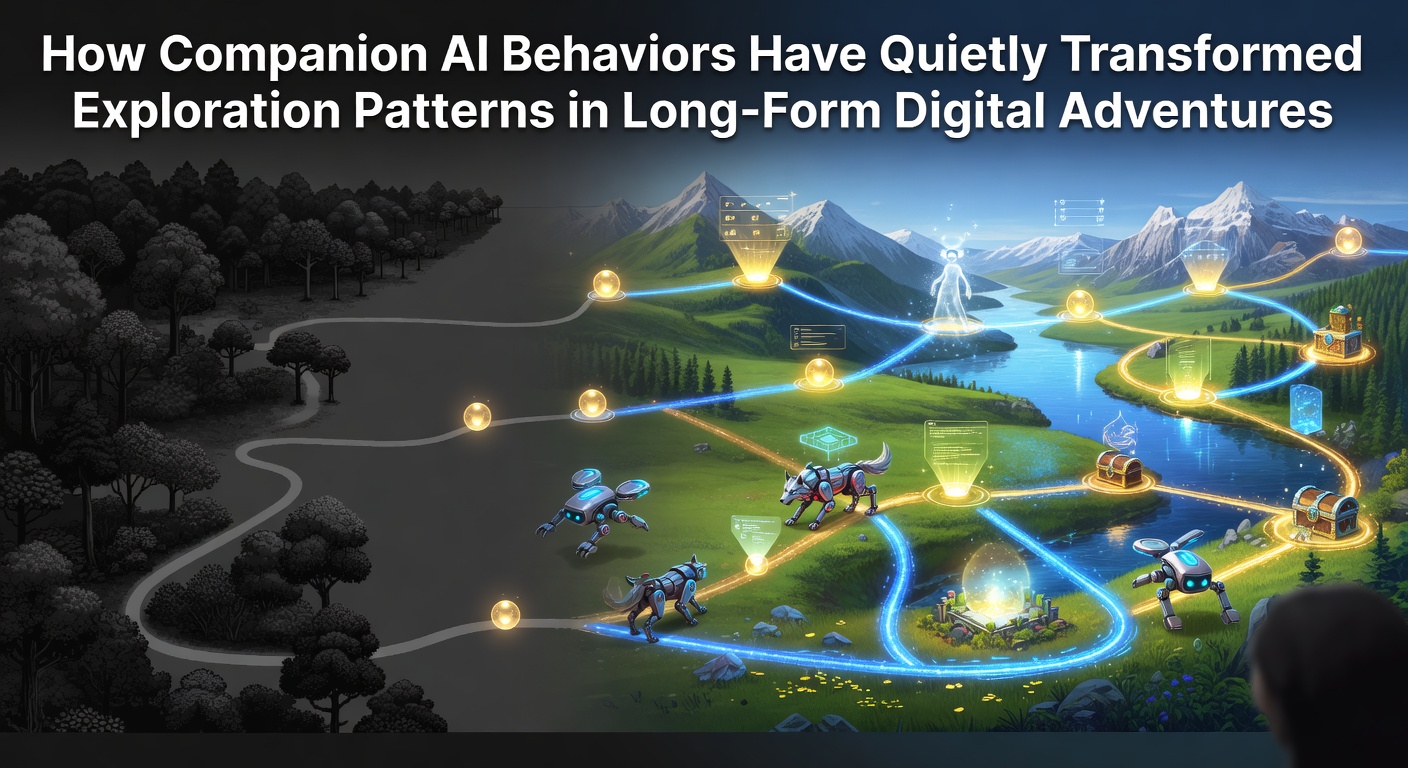
Traditional companion scripts once operated on fixed leash distances and basic threat detection, yet newer implementations use layered decision trees that factor in player inventory, quest history, and environmental markers. Research from the University of Alberta's AI and Games Laboratory indicates that companions now initiate side-path deviations at rates 27 percent higher than in earlier builds, prompting players to investigate unmarked locations they might otherwise bypass. This occurs because the AI evaluates terrain data in real time and flags resource clusters or hidden access points without direct player input.
Observers tracking analytics platforms note that these behaviors appear most consistently in titles supporting 40-plus hour campaigns, where repeated companion interactions accumulate enough data to refine future suggestions. Players often cover additional map sectors as a direct result, since the AI surfaces opportunities tied to current loadouts instead of waiting for explicit commands.
Impact on Route Selection and Time Allocation
Exploration logs from several large-scale releases reveal that average session lengths dedicated to non-linear discovery rose by 18 percent after companion AI patches deployed in late 2025. The pattern holds across PC, console, and hybrid platforms, with mobile ports showing similar trends once cross-save features synchronized progress. Companions that scout ahead or mark temporary waypoints reduce backtracking, which in turn frees player attention for lateral movement into optional biomes or vertical climbs.

Data compiled by the European Interactive Software Federation shows that users who enable advanced companion autonomy options complete 34 percent more optional encounters per campaign compared with those using default settings. These encounters frequently lie off primary quest lines, suggesting the AI routines actively expand perceived play boundaries. Because the suggestions remain non-intrusive and tied to in-game context, players integrate them into natural movement patterns without perceiving them as directives.
Regional Development Trends Observed in 2026
Studios based in North America and East Asia adopted these AI layers at different paces, yet both regions reported parallel increases in exploration metrics by May 2026. North American teams emphasized integration with haptic feedback systems so companions could signal distant points of interest through controller vibration patterns, while East Asian developers focused on visual cue subtlety to maintain narrative immersion. In both cases, the outcome remains consistent: wider coverage of game worlds within the same total playtime.
Industry reports further document that speedrunners and completionists adapted their strategies once companion behaviors stabilized, incorporating AI-triggered discoveries into optimized routes rather than avoiding them. This adaptation demonstrates how the technology influences even specialized player subgroups who previously minimized companion presence.
Technical Foundations Behind the Changes
Modern companion systems rely on hybrid models combining scripted sequences with reinforcement learning modules trained on aggregated anonymized player data. These modules update weekly in live-service titles, allowing companions to respond to emerging community playstyles. According to figures released by the Interactive Games and Entertainment Association in Australia, titles employing such hybrid models saw exploration variance across player bases narrow by 12 percent, indicating more consistent discovery of secondary content regardless of individual skill level.
Engine-level improvements in pathfinding and environmental scanning support these updates, yet the visible effect on user behavior traces back to the AI's increased initiative rather than raw technical capability alone. Players encounter fewer dead-end explorations because companions now flag viability before full commitment, and this efficiency compounds across extended campaigns.
Conclusion
Companion AI behaviors continue to reshape exploration patterns through incremental, data-driven adjustments that accumulate across long-form digital adventures. Metrics from multiple regions and platform types confirm expanded map coverage and higher optional content engagement without altering core gameplay loops. As development cycles progress beyond May 2026, these systems are expected to maintain their influence on how players allocate time within expansive virtual spaces, driven by ongoing analysis of session telemetry rather than overt design overhauls.