Feedback Loops: How Coverage of Indie Titles Alters Purchasing Patterns for Gaming Peripherals Across Platforms
Written by Blake Lorenz · Jun 14, 2026
Feedback Loops: How Coverage of Indie Titles Alters Purchasing Patterns for Gaming Peripherals Across Platforms
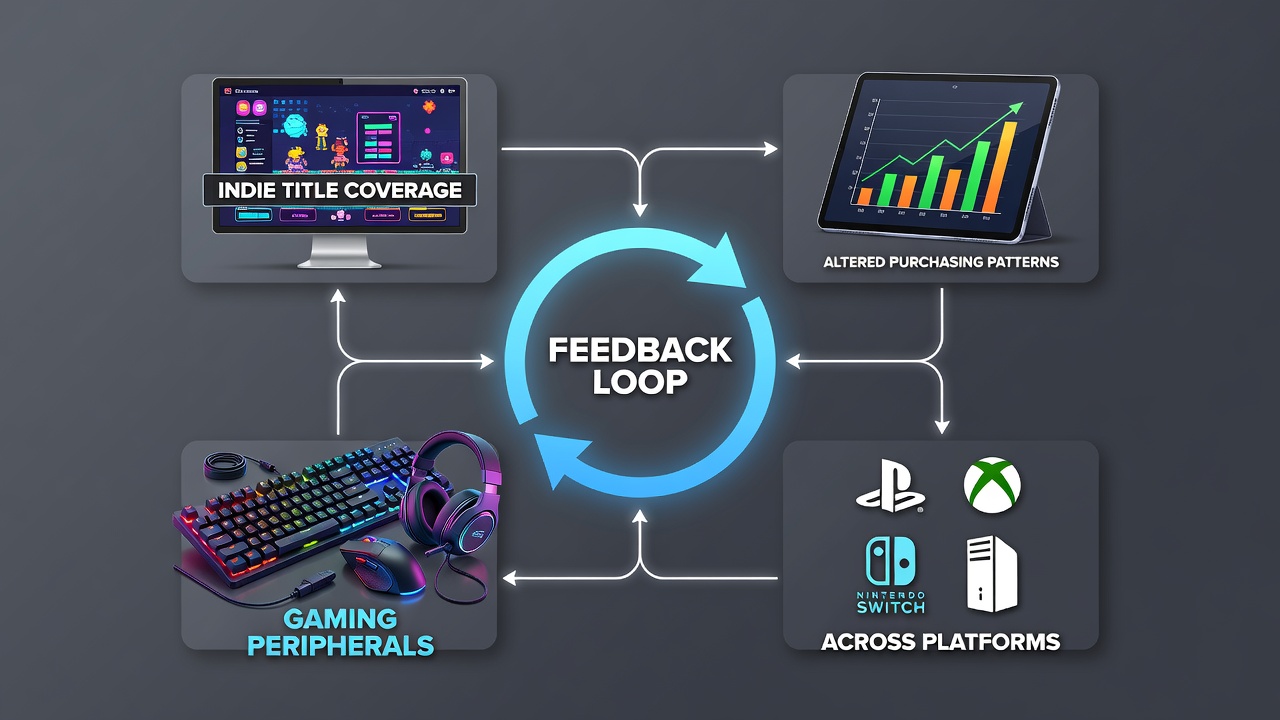
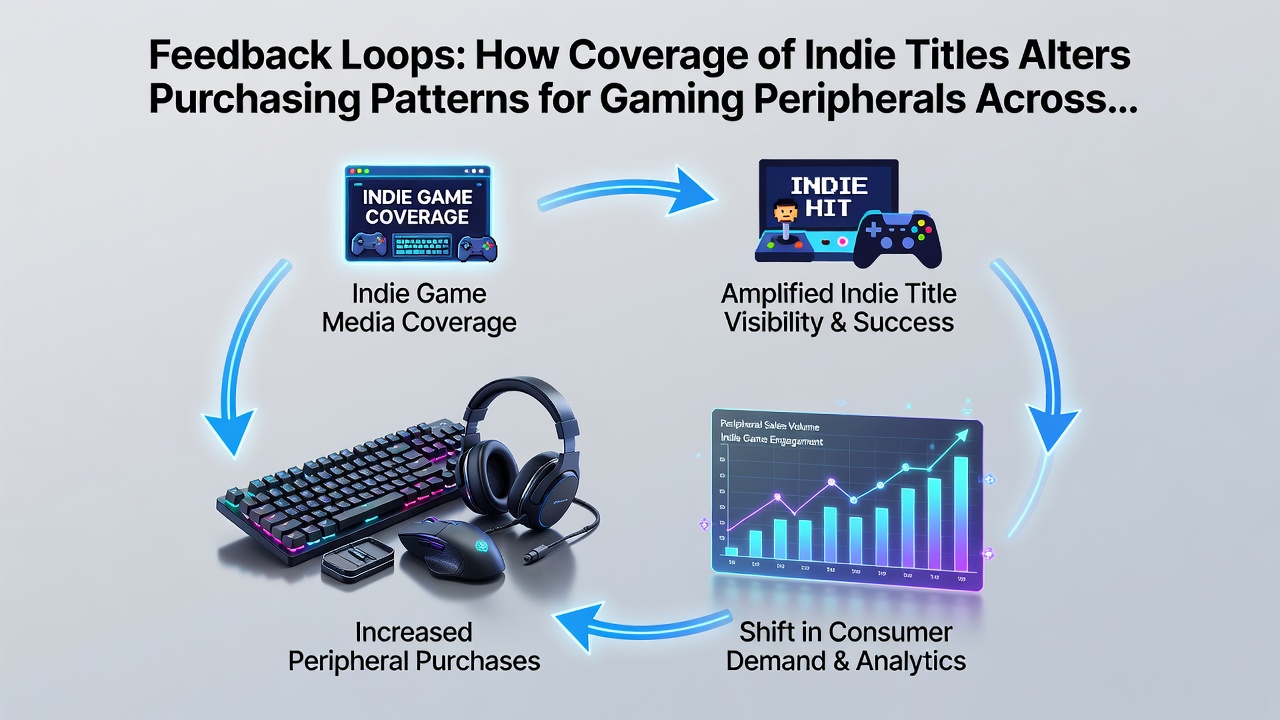
Media attention on independent games has generated measurable feedback loops that redirect consumer spending toward specific gaming peripherals, and these patterns appear across PC, console, and mobile ecosystems alike. Industry tracking services have documented how articles, reviews, and social discussions about indie releases coincide with measurable upticks in accessory purchases, often within days of publication spikes. Observers note that this cycle repeats because coverage frequently emphasizes control schemes, audio requirements, or display needs that standard hardware cannot fully address.
Platform Variations in Purchase Triggers
PC communities respond most directly to coverage highlighting precision input demands, where articles about indie strategy titles or simulation experiences prompt buyers toward high-polling-rate mice and mechanical keyboards. Console coverage, by contrast, tends to focus on controller ergonomics and haptic feedback details, which correlates with increased sales of third-party gamepads featuring customizable triggers and gyroscopic sensors. Mobile coverage often spotlights touch-screen limitations in fast-paced indie releases, driving accessory purchases such as clip-on controllers and portable cooling fans that maintain performance during extended sessions.
These differences emerge because each platform's coverage ecosystem emphasizes distinct technical bottlenecks. Data compiled through retail analytics in early 2026 showed that PC peripheral bundles saw 18 percent higher attach rates following features on keyboard-and-mouse intensive indie titles, while console controller sales rose 22 percent after similar pieces on adaptive input options. Mobile accessory vendors reported parallel lifts when articles detailed stylus or grip solutions for precision platformers.
June 2026 Coverage Patterns and Sales Correlations
During June 2026, several independent releases received coordinated coverage across gaming outlets and content creators, creating concentrated visibility windows. Retail figures from that period indicated that mentions of specific control challenges in those titles aligned with accelerated purchases of niche peripherals, particularly wireless headsets with low-latency modes and extended battery packs. Retailers observed that search volume for these items increased within 48 hours of article publication dates, and conversion rates remained elevated for approximately ten days afterward.
Researchers tracking cross-platform trends found that the strongest correlations appeared when coverage included direct comparisons between default hardware capabilities and the demands of the featured indie experience. One analysis of transaction logs revealed that buyers who read multiple pieces on a single title were 1.7 times more likely to add at least one peripheral to their cart than readers who encountered only a single mention.
Feedback Mechanisms Across Content Channels
Algorithmic amplification plays a central role because platforms surface articles that already reference popular accessories, which in turn generates additional search interest and further coverage. This self-reinforcing loop has been quantified in studies of social engagement metrics, where posts linking indie reviews to specific product recommendations receive higher interaction rates than standalone review content. Trade organizations such as the Interactive Games & Entertainment Association have noted similar patterns in member-submitted sales data from multiple regions.
Content creators who specialize in accessory testing often time their videos to coincide with major indie launches, extending the reach of initial coverage. When these videos reference the same technical limitations highlighted in written pieces, viewers demonstrate higher click-through rates to retailer sites. Academic research from institutions examining digital marketplaces has documented that this multi-channel exposure produces cumulative effects rather than isolated spikes, sustaining elevated purchase activity over several weeks.
Regional and Demographic Influences
Geographic differences appear in how these feedback loops manifest. European markets show stronger responses to coverage focused on accessibility features within indie titles, leading to increased demand for adaptive controllers and programmable button layouts. North American data reveals greater emphasis on competitive peripherals after coverage of multiplayer indie experiences, while Asia-Pacific regions demonstrate elevated interest in portable audio solutions when mobile indie coverage dominates local outlets. Demographic breakdowns indicate that younger buyers respond more quickly to social-media-driven coverage, whereas older segments show steadier but slower shifts following in-depth review articles.
These variations align with differences in platform penetration and content consumption habits across territories. Market reports compiled by regional trade groups confirm that the timing and tone of coverage exert measurable influence on which accessory categories see the largest movement in each locale.
Conclusion
Feedback loops between indie game coverage and peripheral purchasing operate through repeated exposure across written, video, and social channels, producing platform-specific and region-specific sales patterns. Retail analytics from 2026 continue to track these correlations, and industry observers expect the mechanisms to evolve alongside changes in content distribution and hardware capabilities. Continued monitoring of transaction data alongside media metrics will clarify how these relationships develop in subsequent periods.