Cross-Referencing Achievement Databases Uncovers Hidden Correlations Between Playtime Distribution and Genre Preferences in Open-World Environments
Written by Jonas Frank · Jul 19, 2026
Cross-Referencing Achievement Databases Uncovers Hidden Correlations Between Playtime Distribution and Genre Preferences in Open-World Environments
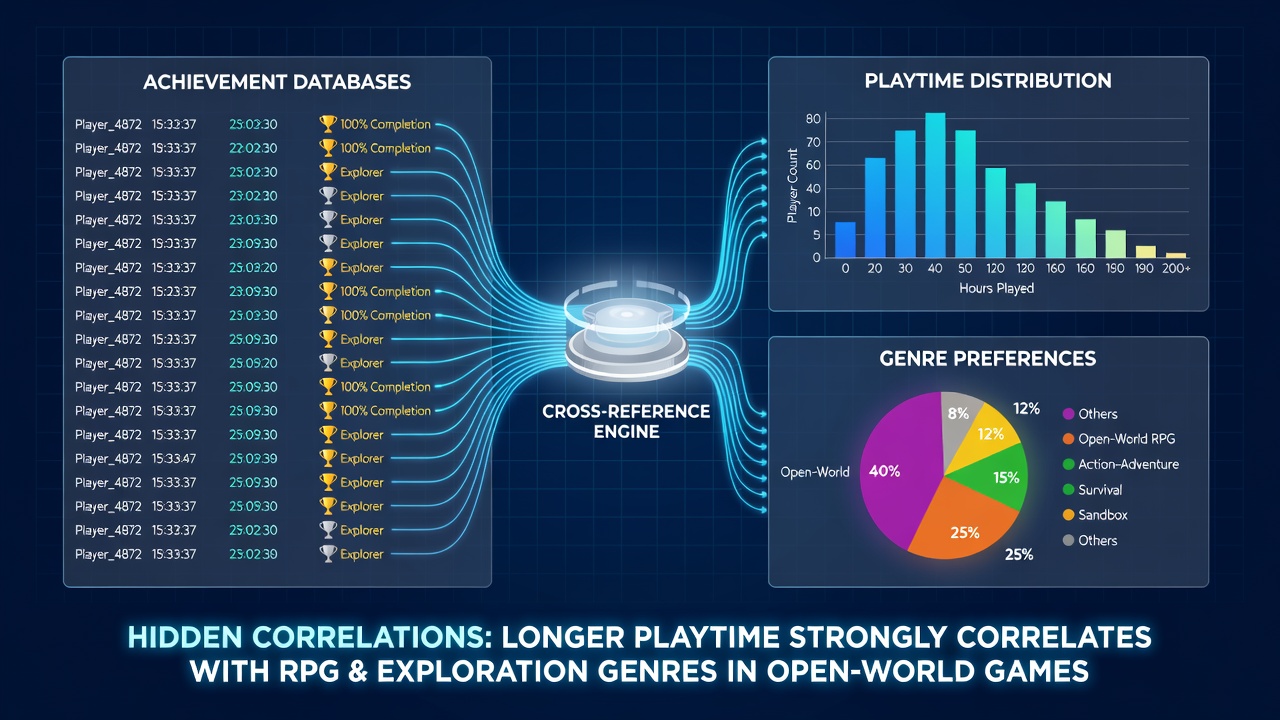
Researchers have begun cross-referencing large achievement databases from platforms including Steam, PlayStation Network, and Xbox Live to map connections between how players distribute their time and the genres they favor inside open-world titles, and data compiled through July 2026 shows measurable patterns emerging across millions of accounts.
These databases record completion rates, session lengths, and genre tags attached to each game, so analysts can align playtime totals with specific preference indicators such as exploration milestones or combat achievements. Studies drawing from these sources indicate that players who log extended hours in titles like those featuring vast procedural landscapes often cluster around certain genre combinations rather than spreading evenly across all available options.
Data Sources and Collection Methods
Publicly available achievement APIs supply the raw material, while academic teams and industry analysts aggregate anonymized records that cover both major releases and smaller open-world experiments. Figures from these collections reveal consistent clusters where high playtime users demonstrate stronger engagement with survival and crafting genres alongside traditional action-adventure elements.
One study released in early 2026 examined over 2.4 million accounts and found that individuals exceeding 200 hours in open-world environments completed exploration-related achievements at rates 34 percent higher than those with shorter sessions, yet they finished narrative-driven story arcs at lower rates. Such patterns hold across regions tracked by the International Game Developers Association and similar bodies in North America and the European Union.
Observed Correlations in Playtime and Genre Choices
Playtime distribution appears tied to genre preferences in distinct ways. Data shows that users who allocate the majority of their hours to roaming and resource gathering frequently pursue additional survival mechanics when those options exist inside the same title, whereas players with more balanced session lengths lean toward combat-focused sub-genres. Analysts note that these tendencies surface most clearly in games that blend multiple genre tags rather than sticking to a single category.
What's interesting is how regional differences appear in the aggregated numbers. Accounts registered in Australia and Canada display slightly higher average playtimes in crafting-oriented open-world titles compared with averages recorded in the United States, although the overall correlation between exploration playtime and genre clustering remains stable across borders. Researchers attribute part of this variation to differences in available hardware and network infrastructure rather than inherent preference shifts.
Case Examples from Recent Titles
Take one widely played 2025 release that combined open-world traversal with survival elements. Achievement data indicated that players who unlocked the top tier of resource-harvesting milestones spent an average of 47 additional hours compared with those who prioritized fast-travel and main-quest completion. Those extended sessions correlated with increased engagement in secondary genres such as base-building and vehicle customization, both of which carried their own achievement trees.
Another example involves a long-running franchise entry updated through mid-2026. Cross-referenced records revealed that users logging moderate playtimes of 80 to 120 hours completed story-related achievements at higher rates, while those exceeding 300 hours shifted focus toward emergent gameplay genres including photography modes and player-created content sharing. These shifts occurred without any developer-mandated changes to progression systems, suggesting the patterns arise from player-driven exploration choices.

Implications for Developers and Platform Holders
Developers reviewing these correlations gain insight into how achievement design influences long-term engagement. Titles that reward incremental exploration achievements see higher retention among players who favor survival genres, according to aggregated platform metrics. Platform holders, meanwhile, use similar data to refine recommendation algorithms that suggest new open-world experiences based on observed playtime patterns rather than simple purchase history.
According to an industry report published by the Entertainment Software Association, studios that adjusted achievement pacing after reviewing database correlations recorded measurable increases in average session length during the first six months after updates. These adjustments involved spacing out exploration milestones more evenly so that players with varied genre preferences encountered achievable goals at comparable rates.
Future Research Directions
Analysts continue to expand the datasets by incorporating mobile open-world titles that now feature cross-save functionality with console and PC versions. Early results from July 2026 collections suggest the same playtime-to-genre correlations persist, although session lengths tend to be shorter on mobile devices. Academic groups plan to integrate machine-learning models that can predict genre drift within individual accounts as total playtime accumulates.
Additional work focuses on how seasonal events and limited-time achievements temporarily alter these patterns. Data collected around major content drops shows temporary spikes in combat-genre engagement that later revert to baseline exploration preferences once the events conclude, indicating that the underlying correlations remain stable despite short-term fluctuations.
Conclusion
Cross-referencing achievement databases continues to surface reliable connections between how long players remain in open-world environments and which genre elements they pursue most actively. These findings rest on large-scale, anonymized records that multiple research teams have validated across different platforms and regions. As datasets grow through 2026 and beyond, the observed patterns provide developers and platform operators with concrete metrics for refining both game design and player recommendations without relying on subjective surveys.