Community Networks Drive Texture Pack Archives for Classic PC Strategy Games
Written by Paul Fischer · May 27, 2026
Community Networks Drive Texture Pack Archives for Classic PC Strategy Games
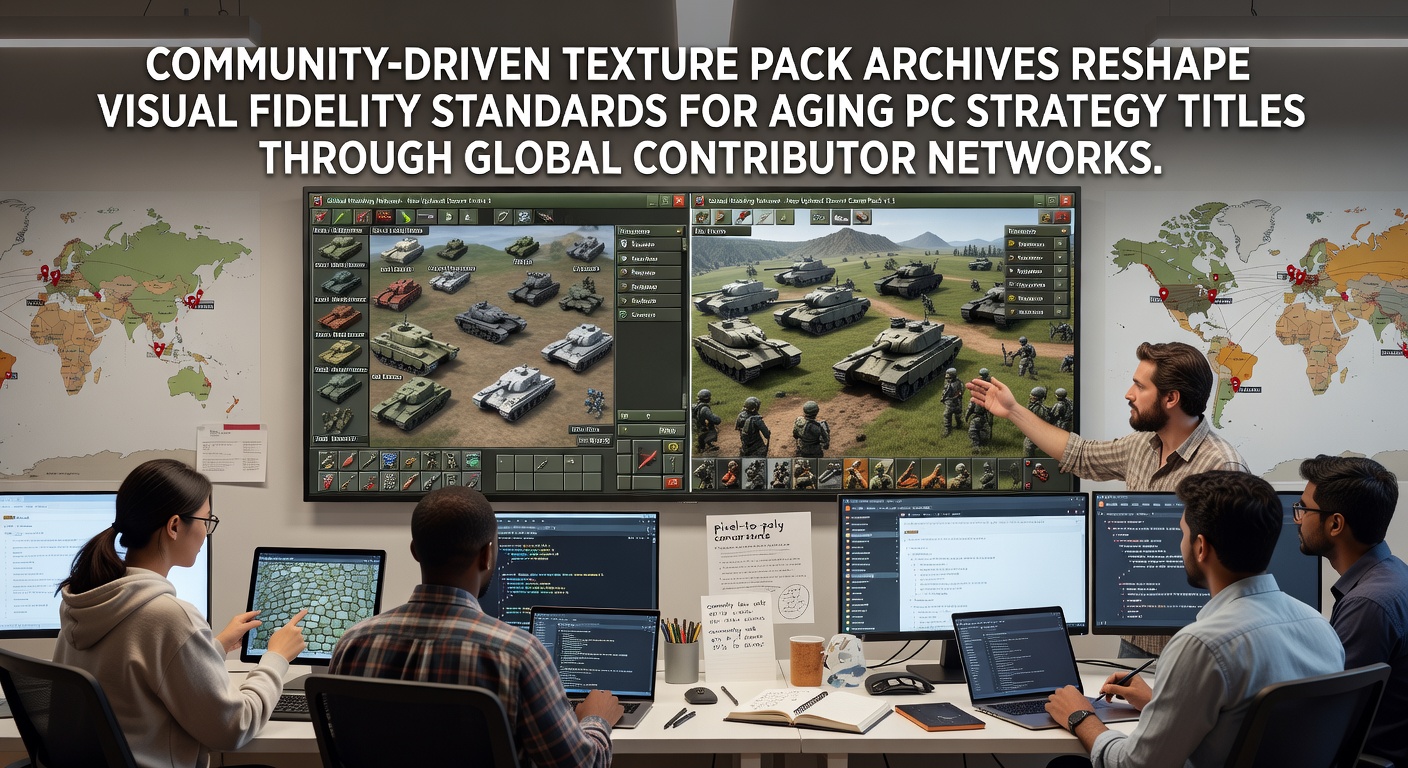
Community-driven archives have expanded access to high-resolution texture packs for older PC strategy titles since the early 2020s, and these collections continue to evolve through coordinated networks of contributors located across multiple continents. Observers note that participants upload revised asset files, document compatibility patches, and maintain version histories that allow users to restore or enhance visuals in games released decades earlier. Data from May 2026 indicates sustained growth in archive participation rates, with new submissions arriving from regions including North America, Europe, and Asia at consistent intervals. These efforts focus on titles such as classic real-time strategy releases and turn-based simulations where original assets often appear limited by the display standards of their release eras. Contributors apply modern rendering techniques while preserving core gameplay elements, and the resulting packs integrate through established mod loaders that many players already employ. Researchers at institutions tracking digital preservation have documented how such projects extend the usable lifespan of software libraries that might otherwise fade from active use.Global Contributor Structures and Archive Operations
Participants coordinate through dedicated platforms that categorize submissions by game title, resolution tier, and hardware requirement, which streamlines retrieval for end users seeking specific enhancements. Teams in one region often handle initial asset extraction while others perform quality checks and optimization passes before final integration, and this division of labor supports continuous updates without centralized oversight. Figures from industry monitoring groups reveal that archive download volumes for strategy titles increased steadily between 2024 and 2026, reflecting broader interest in visual restoration projects.
One study released by a Canadian research consortium examined participation patterns and found that contributors frequently specialize in particular visual elements such as terrain mapping or unit detailing, allowing collective output to surpass what isolated individuals could achieve. These networks also maintain compatibility matrices that list tested configurations across operating systems and graphics drivers, reducing trial-and-error for those applying the packs.Impact on Visual Standards and Hardware Adaptation
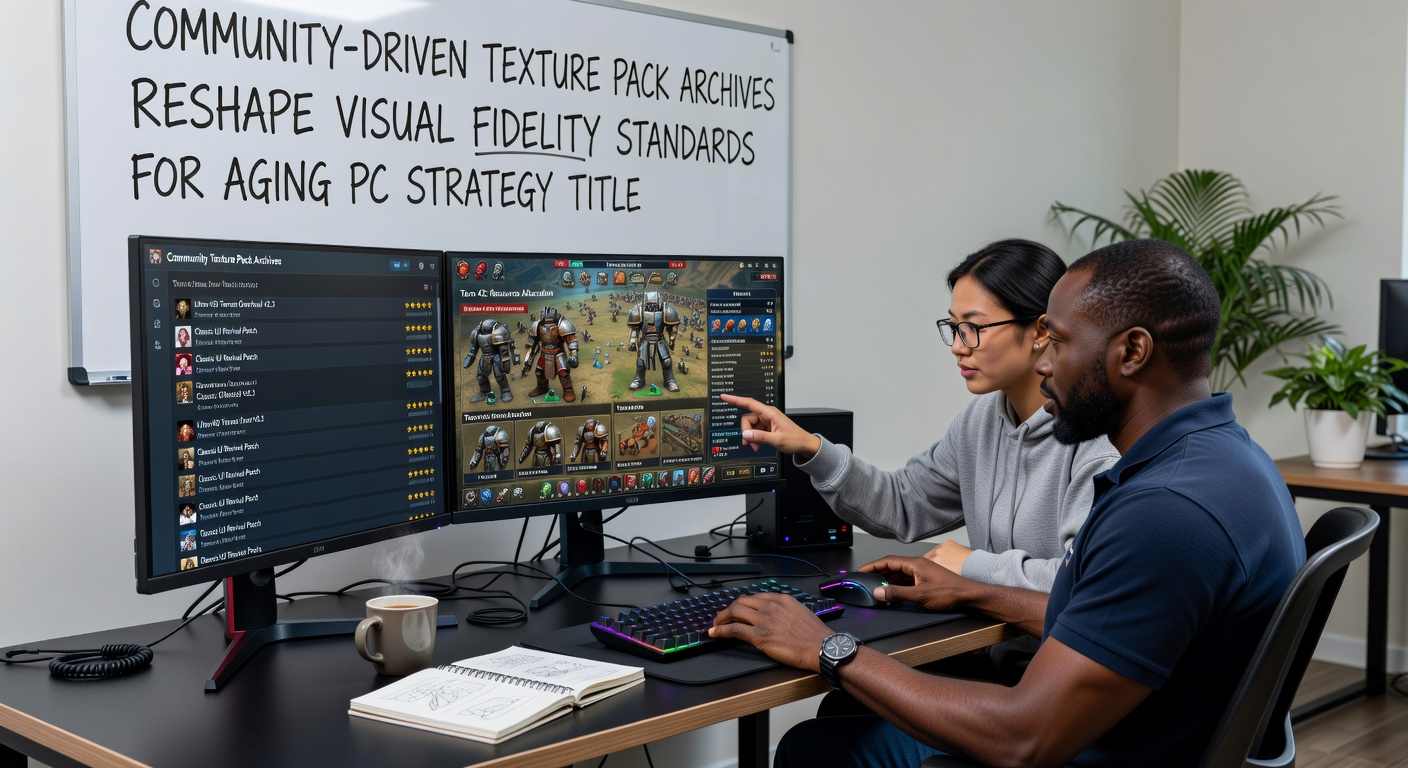 Texture refinements produced through these archives have prompted adjustments in how legacy strategy games render on contemporary hardware, particularly as players connect older titles to higher-resolution monitors and multi-display arrangements. Evidence collected by the Interactive Software Federation of Europe shows measurable shifts in recommended graphics settings shared within community forums, where users report successful scaling of updated assets without performance degradation on mid-range systems. Developers of archive tools have incorporated automated validation scripts that flag potential conflicts with existing mods, and these features help maintain stability across large contributor bases. In practice, a pack released for a 1990s-era title might include layered detail maps that activate only when certain hardware thresholds are met, which preserves frame consistency during intensive campaign sequences.
Preservation Outcomes and Data Trends
Archival records indicate that texture pack projects have preserved visual elements from more than 150 strategy titles by May 2026, with metadata logs tracking contributor hours and revision counts. Academic papers published through European university networks highlight how distributed verification processes catch inconsistencies that single-author efforts might overlook, resulting in more uniform output across different lighting conditions and camera angles.
Those tracking usage statistics observe that educational institutions sometimes incorporate these restored versions into digital history modules, allowing students to examine strategic decision-making alongside improved visual context. Hardware vendors have noted corresponding demand for legacy compatibility drivers, as players seek stable environments for running updated asset collections alongside newer releases.