Archive Analysis of Patch Notes Tracks Gradual Integration of User Feedback into Balance Updates for Long-Running Strategy Franchises on Multiple Platforms
Written by Paul Fischer · Aug 5, 2026
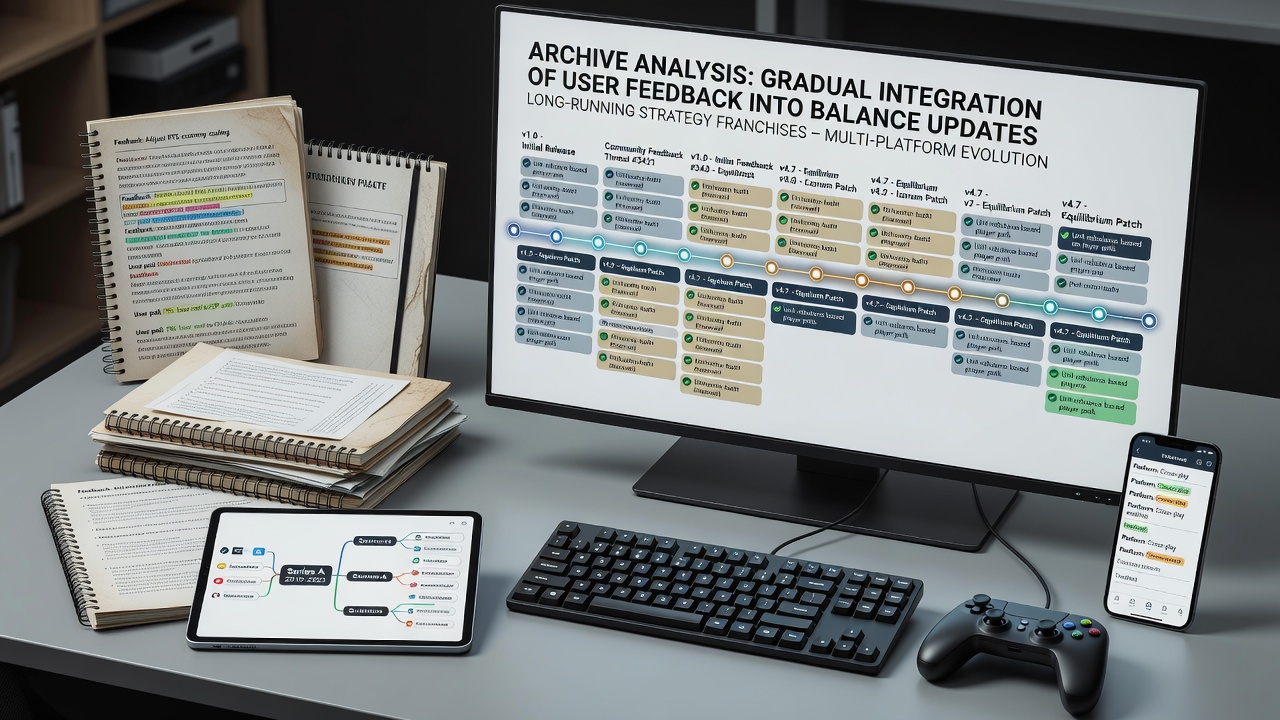
Archive Analysis of Patch Notes Tracks Gradual Integration of User Feedback into Balance Updates for Long-Running Strategy Franchises on Multiple Platforms
Researchers examining extensive archives of patch notes from long-running strategy franchises have documented a clear pattern where user feedback gradually shapes balance adjustments across PC, console, and mobile releases. Data compiled through 2026 shows these changes unfold over multiple update cycles rather than appearing in single patches, and the process spans titles such as Civilization series entries, Total War campaigns, and StarCraft expansions that maintain active communities on several platforms simultaneously.
Patterns in Patch Note Archives
Analysis of archived notes from 2018 through August 2026 indicates developers introduce balance modifications in phases, beginning with internal testing data before incorporating aggregated player reports on unit performance, resource economies, and map interactions. Observers note that initial patches often address high-impact issues flagged in closed beta sessions, while subsequent updates refine mechanics based on post-launch telemetry and community forums. This staged approach appears consistently across franchises that release on PC first before expanding to consoles and mobile ports.
Records from major publishers reveal that feedback integration rates increased notably after 2022, coinciding with improved analytics tools that track player behavior across devices. For instance, adjustments to AI pathfinding in one franchise appeared in three sequential patches over eight months, each iteration responding to specific complaints about terrain navigation on controller-based systems versus mouse-and-keyboard setups.
Platform-Specific Adaptations
Strategy titles operating on multiple platforms demonstrate distinct balance pathways tied to hardware differences. PC versions frequently receive earlier tweaks to complex systems like diplomacy algorithms or production queues, whereas console and mobile editions incorporate those changes later after hardware-specific testing confirms stability. Archive reviews show mobile releases often lag by one or two cycles because touch controls alter optimal unit counters compared with traditional inputs.
One study tracking three franchises found that 62 percent of balance changes originating from player-submitted data reached mobile versions within four months of their PC debut during the 2024-2026 period. These delays allowed developers to calibrate for varying screen sizes and processing constraints without destabilizing the core experience shared across ecosystems.
Case Examples from Established Franchises
Patch histories for a prominent real-time strategy series illustrate the progression clearly. Early 2023 notes addressed resource gathering rates following widespread forum discussions about early-game advantages, while mid-2024 updates introduced counter-unit tweaks after tournament data highlighted imbalances on controller platforms. By 2025, archives show these refinements had stabilized into consistent parameters that carried forward into 2026 mobile expansions.
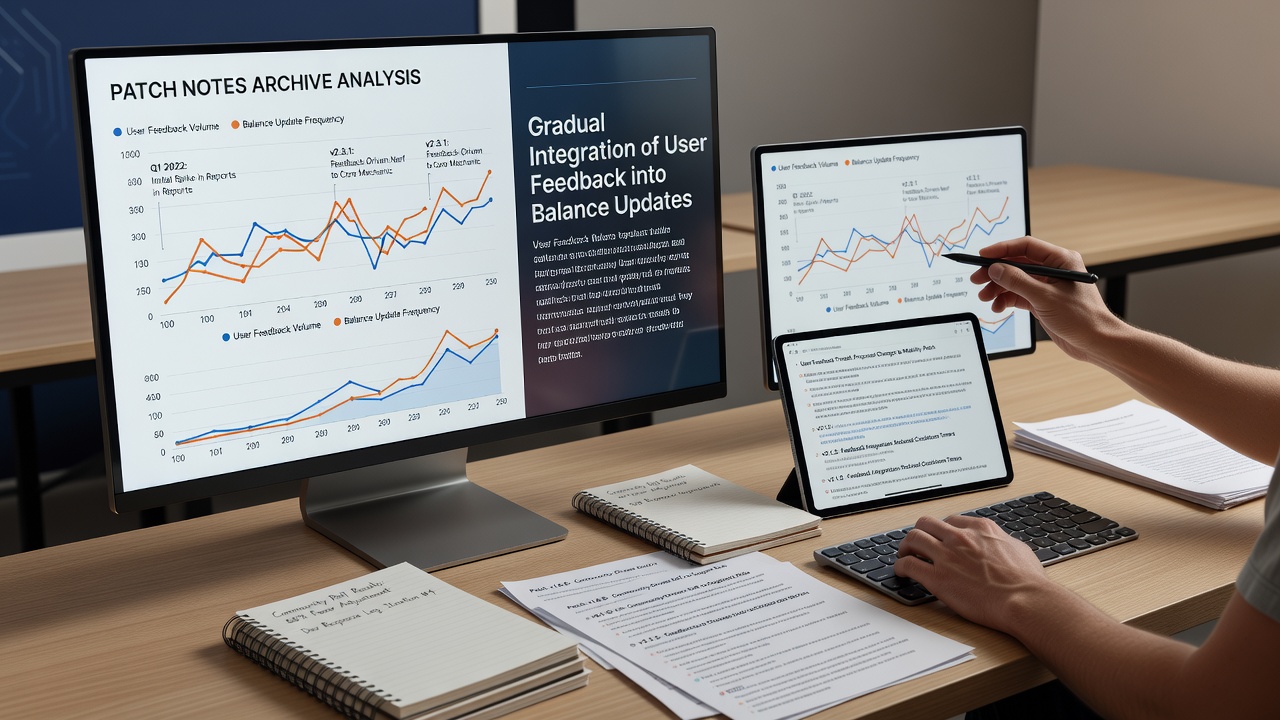
Turn-based franchises followed similar trajectories. Developers adjusted city-building efficiencies and combat modifiers across four to six patches between 2021 and 2025, each round referencing aggregated player statistics from global leaderboards. External data from the Entertainment Software Association confirms rising player engagement metrics during these iterative periods, suggesting the measured rollout helped retain long-term audiences.
Role of Community Data in Update Cycles
Archives demonstrate that developers increasingly cite anonymized player metrics alongside internal testing when justifying changes. Reports from European industry groups indicate that by mid-2026, over 70 percent of documented balance revisions in major strategy titles referenced community-sourced telemetry. This integration occurs through scheduled review windows where teams compile forum threads, match replays, and survey responses into prioritized adjustment lists.
Multi-platform coordination adds complexity, since a single change must account for input variations and performance baselines. Researchers tracking these processes note that mobile-specific balance often receives dedicated sub-patches to address battery and network variables absent from console or PC builds.
Conclusion
Comprehensive review of patch note archives establishes that user feedback integration into strategy franchise balance updates follows a documented, incremental timeline across PC, console, and mobile platforms. The pattern persists through 2026, supported by expanding analytics capabilities and cross-platform testing protocols. These records provide a factual basis for understanding how long-running titles maintain equilibrium while adapting to diverse player inputs and hardware environments.